








 GET QUOTE
Home / Editorial / Dual wardrobe design options: your 2026 guide

common
15 Jun 2026
Dual wardrobe design options: your 2026 guide
Explore trending dual wardrobe design options for 2026. Discover how the right configuration can transform your bedroom's style and functionality!
Dual wardrobe design refers to any storage configuration that pairs two wardrobe units, or divides a single fitted structure into two distinct zones, to serve one or two users within the same space. The right configuration does far more than hold clothes. It shapes how a bedroom feels, how efficiently you move through your morning routine, and how well the room ages alongside your changing tastes. Modern wardrobe design in 2026 centres on architectural integration, neutral palettes, and integrated lighting, which means the decisions you make now about style, materials, and layout will define your bedroom for years to come.

1. The most popular dual wardrobe design options explained
The fitted wardrobe market offers a wide spectrum of styles, and understanding the core categories makes every subsequent decision easier.
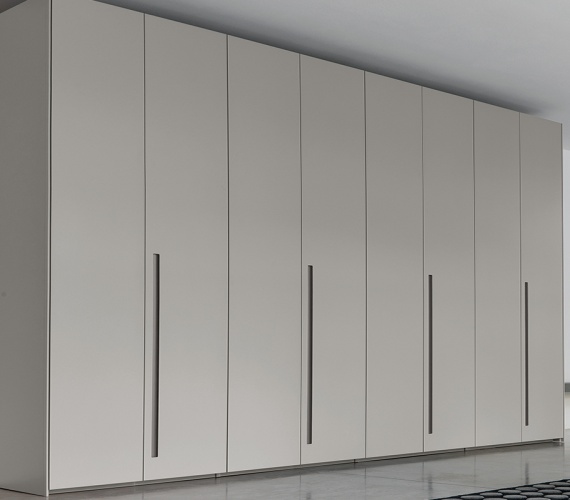
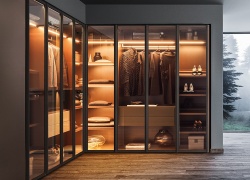
- Floor-to-ceiling built-in wardrobes. These are the gold standard for maximising storage in a fixed footprint. By running the full height of the room, they eliminate the dead space above a standard wardrobe and create a clean, architectural finish that feels part of the room rather than added to it.
- Modular open storage systems. Systems such as IKEA BOAXEL use open shelving, hanging rails, and drawer units that can be configured freely. They suit homeowners who prefer visible organisation and want to reconfigure their storage as needs change.
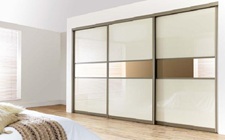
- Sliding door wardrobes. Sliding wardrobes are a growing favourite in contemporary design because of their sleek operation and the fact that they require no door-swing clearance. Glass, mirrored, or solid panel doors are all available.
- Hinged door wardrobes. Traditional hinged doors offer unrestricted access to the full interior in one movement, which makes them practical for deep wardrobes where you need to see everything at once.
- Mixed-material designs. Combining wood carcasses with glass inserts, lacquered panels, or metal frames gives a wardrobe visual depth and allows it to complement a broader range of bedroom themes.
Pro Tip: If your bedroom has a ceiling height above 2.4 metres, always specify floor-to-ceiling carcasses. The extra storage you gain above a standard 2-metre unit is substantial, and the room looks taller and more considered as a result.
2. How space-saving features shape your design choice
Space constraints are the single most decisive factor in wardrobe selection, and the right features can transform a modest room into a highly organised one.
- Sliding doors in compact rooms. Sliding doors save room by eliminating the clearance zone that hinged doors demand. In a bedroom under 3 metres wide, this can free up enough floor space to add a bedside table or a small chair.
- Open modular systems for efficient organisation. Open shelving encourages deliberate organisation because everything is visible. This reduces the time spent searching and makes it easier to maintain order day to day.
- Floor-to-ceiling vertical storage. Extending storage to the ceiling is the most cost-effective way to increase capacity without increasing the wardrobe’s footprint. Upper shelves work well for seasonal items, luggage, and bedding.
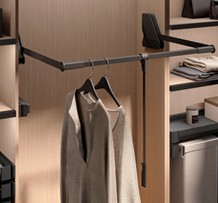
- Pull-out accessories and flexible shelving. Integrated pull-out rails, shelves, and drawers increase organisational efficiency significantly. Pull-out trouser racks, shoe shelves, and internal drawers mean every centimetre of depth is used rather than wasted.
- Compact modular units with proven capacity. A 125 cm BOAXEL unit can hold approximately 40 shirts, 12 to 14 pairs of trousers, and 6 pairs of shoes. That figure demonstrates how much a well-specified compact unit can achieve when internal accessories are chosen thoughtfully.
The practical lesson here is that capacity is not determined by external size alone. A 125 cm unit with the right internal layout outperforms a 180 cm unit with bare hanging rails and a single shelf.
3. Built-in vs freestanding and sliding vs hinged: a clear comparison
Choosing between design types becomes straightforward once you weigh the practical trade-offs side by side.
Built-in vs freestanding
Built-in wardrobes maximise space and integrate with the room’s architecture in a way that freestanding units cannot replicate. A fitted wardrobe uses every millimetre between floor and ceiling and wall to wall, leaving no awkward gaps where dust collects. Freestanding wardrobes, by contrast, are portable and require no installation, which suits renters or those who move frequently. They are, however, limited by standard manufactured dimensions and rarely fit a room perfectly.
Sliding vs hinged doors
| Feature | Sliding doors | Hinged doors |
|---|---|---|
| Space requirement | No door-swing clearance needed | Requires 50 to 60 cm clearance in front |
| Internal access | Partial access at any one time | Full interior visible in one movement |
| Aesthetic | Sleek, contemporary, minimal | Classic, flexible, wide style range |
| Maintenance | Track cleaning required periodically | Hinges may need adjustment over time |
| Best suited to | Compact or narrow bedrooms | Larger rooms with generous floor space |
The PAX/AULI sliding wardrobe range illustrates the sliding door category well. It offers soft-closing doors, narrow frames designed for limited spaces, and a planning tool that lets you configure the interior before committing to a purchase. That kind of pre-purchase visualisation reduces costly mistakes.
Pro Tip: If you are choosing sliding doors for a dual wardrobe, specify mirrored panels on at least one door. A full-height mirror eliminates the need for a separate dressing mirror and makes the room feel considerably larger.
4. How colour and material choices enhance wardrobe aesthetics
Colour and finish decisions are where dual wardrobes shift from functional storage to a genuine design feature within the bedroom.
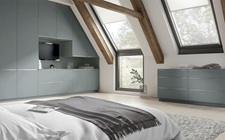
Warm neutral and natural colour palettes are the dominant trend in 2026, and for good reason. Tones such as warm white, greige, soft oak, and muted sage integrate with almost any bedding, flooring, or wall colour. This matters because your bedroom décor will change over time, and a wardrobe in a neutral finish will remain relevant through those changes without requiring replacement.
- Dual-tone designs. Half-and-half colour combinations, whether split vertically or horizontally, add visual interest without overwhelming the room. A common pairing is a darker lower section with a lighter upper section, which grounds the wardrobe visually and draws the eye upward.
- Glass and semi-transparent inserts. Glass door panels create a sense of depth and make a wardrobe feel less visually heavy. Frosted or ribbed glass offers a degree of concealment while still allowing light to pass through.
- Natural wood finishes. Oak, walnut, and ash veneers bring warmth and texture to a room that painted finishes cannot replicate. They also age well, developing character rather than looking dated.
- Sustainable materials. Demand for FSC-certified timber, low-VOC lacquers, and recycled board cores is growing. Specifying sustainable materials is both an ethical choice and a practical one, as they tend to be more stable and durable over time.
You can explore wardrobe colour and theme options in detail to match your specific bedroom scheme before committing to a finish.
5. Dual wardrobe designs for shared and individual use
A dual wardrobe serving two people requires more deliberate planning than one serving a single user. The goal is to create two distinct, functional zones within one cohesive design.
- Zoning with adjustable shelving. Dividing the interior into two clearly defined halves, each with its own hanging rail, shelf configuration, and drawer allocation, prevents the wardrobe from becoming a shared muddle. Adjustable shelving means each zone can be reconfigured independently as needs change.
- Modular adaptability. BOAXEL modular systems are designed to be rearranged over time, which is particularly useful for shared wardrobes where storage needs shift. Adding a shoe rack to one zone or a second hanging rail to another takes minutes rather than a full refurbishment.
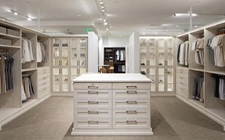
- Drawers within the wardrobe. Internal drawers reduce the need for a separate chest of drawers in the bedroom, freeing floor space. Each user can have a dedicated drawer bank within their zone.
- Varied hanging heights. One zone might prioritise long hanging for dresses and coats, while the other uses double hanging for shirts and jackets. Specifying this at the design stage costs nothing extra and dramatically improves daily usability.
- Planning tools for customised layouts. Both IKEA’s online planner and Xeeni’s free design consultation allow you to map out internal configurations before installation. This step is worth taking seriously, as the internal layout determines how well the wardrobe works in practice.
Pro Tip: For shared wardrobes, assign the side closest to each person’s side of the bed to that person’s zone. It sounds obvious, but it is frequently overlooked and makes a meaningful difference to the morning routine.
You can find further inspiration for shared bedroom storage through fitted bedroom design ideas that address dual-use spaces specifically.
Key takeaways
The most effective dual wardrobe designs combine architectural integration, space-specific door choices, and a considered internal layout to deliver storage that works as hard as it looks good.
| Point | Details |
|---|---|
| Architectural integration matters | Built-in wardrobes outperform freestanding units in space efficiency and long-term style harmony. |
| Door type follows room size | Sliding doors suit compact rooms; hinged doors suit larger spaces with generous clearance. |
| Internal layout determines capacity | A well-specified 125 cm unit can hold 40 shirts, 14 pairs of trousers, and 6 pairs of shoes. |
| Neutral finishes last longer | Warm neutrals and natural wood tones remain relevant through future décor changes, reducing replacement costs. |
| Zoning serves shared use | Dividing a dual wardrobe into two distinct zones with independent configurations prevents shared storage from becoming disorganised. |
Why I always recommend starting with the interior, not the exterior
By Kiran
Most homeowners begin their wardrobe search by choosing a door style or a colour. I understand the impulse. The exterior is what you see every day. But in my experience, the decisions that determine whether a wardrobe genuinely improves your life are all made on the inside.
The number of hanging rails, the height at which they are set, the depth of the shelves, the placement of drawers — these are the details that either make a wardrobe a pleasure to use or a daily frustration. I have seen beautiful fitted wardrobes with mirrored sliding doors and flawless lacquer finishes that were nearly unusable because the interior was specified as an afterthought.
My honest view on trends is this: floor-to-ceiling built-in designs and neutral finishes are not trends at all. They are simply good design. They have been relevant for decades and will remain so. What changes is the surface detail: the profile of the door frame, the texture of the handle, the specific tone of the oak veneer. Invest in the structure and the layout first. Let the surface details follow.
I also think the value of a professional design consultation is consistently underestimated. Not because the process is complicated, but because an experienced designer will ask questions you have not thought to ask yourself. How many pairs of shoes do you actually own? Do you fold or hang your knitwear? Do you need access to your wardrobe in the dark without waking a partner? These questions change the specification in ways that matter every single day.
— Kiran
Design your ideal dual wardrobe with Xeeni

Xeeni brings over 20 years of bespoke fitted wardrobe experience to every project, with a customer satisfaction rating of 4.9 out of 5. Whether you are planning a floor-to-ceiling built-in, a sliding wardrobe for a compact room, or a fully zoned dual wardrobe for a shared bedroom, our team works with you from initial concept through to installation. Every design begins with a free consultation, during which we assess your space, discuss your storage priorities, and produce a detailed layout before any commitment is made. Explore our fitted bedroom design ideas to see what is possible, then book your free design visit to get started.
FAQ
What is a dual wardrobe design?
A dual wardrobe design is a storage configuration that pairs two wardrobe units or divides a single fitted wardrobe into two distinct zones, typically to serve two users or to separate different categories of clothing within one structure.
Are sliding or hinged doors better for a small bedroom?
Sliding doors are the better choice for small bedrooms because they require no clearance in front of the wardrobe to open, saving valuable floor space. Hinged doors need 50 to 60 cm of clearance, which is impractical in a narrow room.
How much can a compact dual wardrobe hold?
A well-specified compact unit at 125 cm wide can hold approximately 40 shirts, 12 to 14 pairs of trousers, and 6 pairs of shoes. The key is choosing the right internal accessories rather than simply increasing the external dimensions.
What colours work best for fitted dual wardrobes in 2026?
Warm neutral palettes including greige, soft white, and natural oak are the leading choices in 2026. These tones integrate with a broad range of interior styles and remain relevant as bedroom décor evolves over time.
Do I need a professional designer for a dual wardrobe?
A professional designer is particularly valuable for dual wardrobes because the internal zoning and layout decisions are more complex than for a single-user unit. Xeeni offers a free design consultation that covers space assessment, internal configuration, and material selection before any work begins. You can find answers to common questions on the fitted bedrooms FAQ page.


