
The technical detail behind a push-to-open wardrobe front: what push-catch mechanisms actually need from the door, how they're rated, and where they should and shouldn't be specified.
A push-to-open catch is a small spring-and-latch unit fixed to the cabinet side panel, engaging a strike plate on the door. Pushing the closed door inward roughly 4–5mm trips the latch and the spring pushes the door back open by 15–20mm — enough to get fingers behind the edge and pull it fully open. Closing is a firm push until the latch re-engages and holds.
| Push travel required | 4–5mm |
|---|---|
| Typical cycle rating (quality mechanism) | 60,000–80,000 cycles |
| Typical cycle rating (budget mechanism) | 15,000–25,000 cycles |
| Minimum door thickness | 16mm |
| Recommended door thickness | 18–22mm |
| Maximum recommended door weight per catch | ≈8kg (heavier doors need 2 catches) |
Push-to-open suits doors that are opened occasionally rather than constantly — top boxes, infrequently-used storage, decorative panelling that needs to read as a single flat surface. It pairs well with soft-close hinges, since the mechanism's own spring-back is gentler when the hinge is also damped.
Daily-use hanging wardrobe doors at reach height, anywhere a young child or someone with reduced grip needs reliable one-handed access, and any door that gets opened with wet or full hands — the firm, deliberate push a catch needs is harder to execute one-handed while carrying laundry.
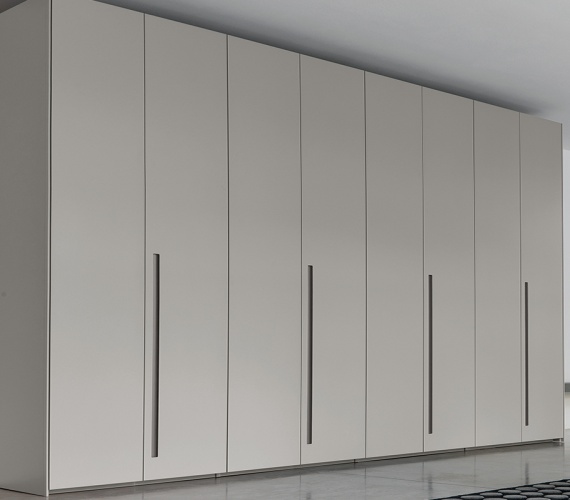
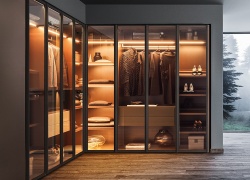
Most of our handleless specifications aren't full-room — they're mixed. A typical wardrobe wall might run push-to-open on the top boxes and any decorative end panels, with proper bar or knob handles on every door within normal reach. This keeps the visual calm of a handleless scheme where it matters most, without making the wardrobe harder to use day to day.










 GET QUOTE