











 GET QUOTE
Home / Editorial / The Complete Fitted Wardrobe Journey: What to Expect (and How to Avoid Problems) at Every Stage
28 Aug 2026
The Complete Fitted Wardrobe Journey: What to Expect (and How to Avoid Problems) at Every Stage
Almost every complaint about a fitted wardrobe traces back to one of three moments: a question that wasn't asked before ordering, a misunderstanding during the fit, or a loose end that was never tied off afterwards. None of these are really about bad luck. They're about a stage in the process where a little more preparation would have prevented the problem entirely.
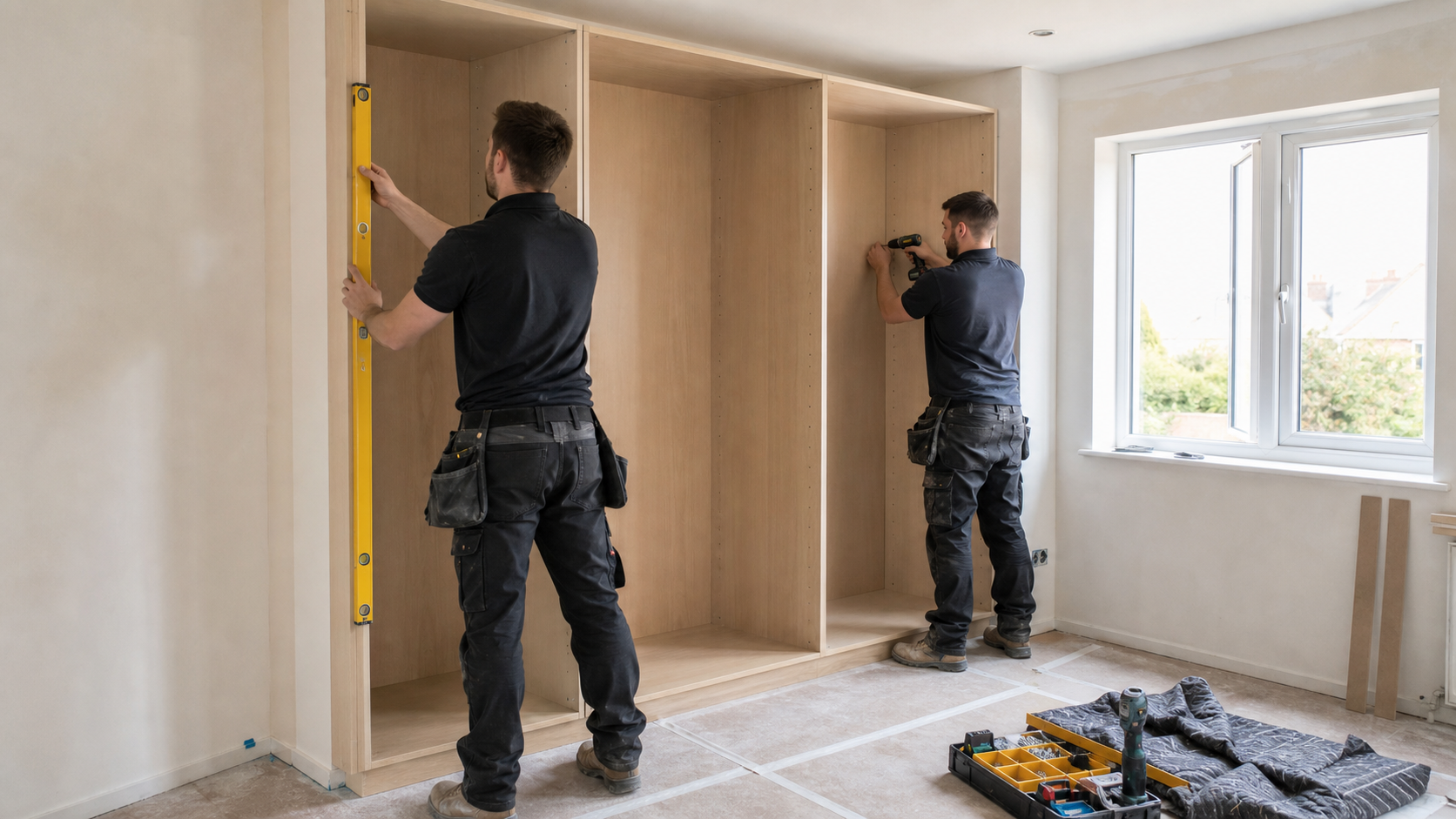
Almost every complaint about a fitted wardrobe traces back to one of three moments: a question that wasn't asked before ordering, a misunderstanding during the fit, or a loose end that was never tied off afterwards. None of these are really about bad luck. They're about a stage in the process where a little more preparation would have prevented the problem entirely.
This guide walks through all three stages — research and planning, installation, and life with the finished wardrobe — with the specific things that commonly go wrong at each one, and what to actually do about them. The scenarios below are illustrative examples built to show how these problems typically play out, not accounts of specific jobs.
Why Most Wardrobe Problems Are Predictable — and Preventable
Fitted wardrobe complaints follow a pattern. They're rarely about the wardrobe itself failing outright — they're almost always about a gap between what the customer expected and what actually happened, and that gap opens up at a predictable point. Understanding the three stages below means you can close that gap before it opens.
Research and Pre-Planning — Where Most Problems Actually Start
The biggest, hardest-to-fix mistakes in a wardrobe project happen before a single panel is cut. Get this stage right and the rest of the process runs far more smoothly.
Problem: Comparing Quotes That Aren't Actually Comparable
Example scenario: A homeowner gets two quotes for the same alcove — £2,400 and £3,900 — and assumes the cheaper one is simply better value. What the lower quote doesn't mention is that it's based on standard MDF with no design visit, while the higher quote includes a proper survey, a named guarantee, and a specific hardware brand.
Two numbers that look comparable often aren't, because they don't include the same things. Tip: ask every fitter for an itemised breakdown — materials, design time, guarantee terms, insurance — before comparing the total figure.
Problem: Measuring the Room Yourself and Getting It Wrong
Example scenario: A customer measures their own alcove with a tape measure and orders based on that figure, only to discover on fitting day that the wall isn't quite square — the wardrobe doesn't sit flush at the back, and a filler panel has to be improvised on the spot.
Tip: insist on an in-person measure before any order is confirmed — never rely on a phone-estimated size for a made-to-measure fit.
Problem: Choosing a Finish You Can't Actually Verify
Example scenario: A customer picks a "matt grey" finish from a product photo on a phone screen. When the wardrobe arrives, the colour reads noticeably cooler in their bedroom's lighting than it appeared online — not a fault, just a mismatch between screen and reality.
Tip: see and handle a physical sample before committing. A showroom visit resolves finish, weight, and hardware-feel questions in minutes.
Problem: Not Knowing What Questions to Ask
Example scenario: A first-time buyer accepts a verbal assurance that "the guarantee covers everything" and doesn't ask for anything in writing. Eight months later, a hinge issue turns into a dispute about what was actually promised.
Tip: bring a written list of questions to any consultation, and ask for answers in writing, not just verbally.
Problem: Underestimating the Full Timeline
Example scenario: A customer books a wardrobe expecting it within two weeks, without realising design sign-off and manufacturing lead time add several more weeks before a fitter is even booked.
Tip: ask for a realistic, staged timeline in writing at the quote stage — design, ordering, manufacturing, and fitting.
Stage 1 Checklist: Before You Commit
- Get an itemised quote breakdown, not just a total figure
- Insist on an in-person measure, not a phone estimate
- See and handle a physical sample before ordering
- Ask for guarantee, insurance, and aftercare terms in writing
- Get a realistic, staged timeline before booking
During Installation — Managing the Process Without Losing Your Patience
Installation is a temporary disruption, not something to fear — but being honest about what commonly goes sideways makes it far easier to manage.
Problem: Scheduling Slippage
Example scenario: A wardrobe fit originally booked for a Tuesday-to-Thursday slot runs into the following week because a delivery of hardware was delayed at the supplier's end — a common, unglamorous cause that has nothing to do with the fitter's skill.
Tip: ask upfront what the process is if a delay happens, and specifically how you'll be informed.
Problem: Communication Gaps Mid-Project
Example scenario: A customer hears nothing for two full days during a multi-day fit and starts to worry, when in reality the fitter was simply working through a slower stage without thinking to send an update.
Tip: agree a communication cadence before work starts — a daily check-in, or a single named contact for the job.
Problem: Protecting the Rest of Your Home
Example scenario: A hallway carpet picks up dust and scuff marks during a two-day fit because no floor protection was laid down between the front door and the bedroom.
Tip: confirm what site protection is standard practice before work begins, not after you notice the mess.
Problem: Discovering the Room Isn't as "Standard" as Assumed
Example scenario: Once the old wardrobe is removed, the fitter discovers a section of wall isn't load-bearing in the way the original plan assumed, requiring an on-the-spot adjustment to the fixing method.
Tip: ask in advance how the fitter handles on-site surprises.
Stage 2 Checklist: Getting Through Installation Smoothly
- Ask what triggers a delay and how you'll be told
- Agree a communication cadence before work starts
- Confirm site protection standards in advance
- Ask how on-site surprises are typically handled
After Installation — What "Finished" Should Actually Look Like
Installation day isn't really the end of the process. The first few weeks of living with the wardrobe matter just as much as the fit itself.
Problem: Minor Snagging Issues
Example scenario: During the final walk-through, a homeowner notices one door hinge sitting very slightly proud of the frame. It's flagged on the spot, adjusted in under ten minutes, and never becomes an issue again.
Tip: do a full inspection with the fitter present before they leave, opening every door and drawer.
Problem: Not Knowing What the Guarantee Actually Covers
Example scenario: A customer assumes their 15-year guarantee covers everything, only to later learn — during an actual issue — that hardware and cabinetry have different terms attached.
Tip: get the guarantee document in writing at handover, and read it before you ever need it.
Problem: No Clear Route for Follow-Up Issues
Example scenario: Six months after installation, a drawer runner starts to stick slightly. Because the customer never confirmed who to contact, it takes several calls to different numbers before reaching someone who can help.
Tip: confirm the aftercare contact process at handover — a specific number, email, or reference.
Problem: Maintenance Nobody Mentioned
Example scenario: A high-gloss finish starts to show fine scratches after a few months because it was cleaned with an abrasive household spray rather than the manufacturer-recommended method.
Tip: ask for basic care guidance specific to your finish before the fitter leaves.
Stage 3 Checklist: Making Sure "Finished" Really Means Finished
- Do a full walk-through inspection before the fitter leaves
- Get guarantee terms in writing and actually read them
- Confirm the specific aftercare contact process
- Ask for finish-specific care and cleaning guidance
The Full Journey, One Page: A Complete Checklist
Before you commit: itemised quote, in-person measure, physical sample, written guarantee/insurance/aftercare terms, realistic staged timeline.
During installation: confirmed delay process, agreed communication cadence, confirmed site protection, understood approach to on-site surprises.
After installation: full walk-through inspection, written guarantee read and understood, confirmed aftercare contact, finish-specific care guidance.
How Xeeni Supports Each Stage
A free design consultation and proper in-home or showroom measuring addresses Stage 1's most common pitfalls before they happen. A structured fitting process with a defined point of contact addresses Stage 2. And a documented guarantee with a genuine aftercare route addresses Stage 3.
Start the process properly.
Book a free design consultation at our West London showroom.
Book a free design consultation at our West London showroom.
All example scenarios in this article are invented and illustrative, designed to show how these situations typically play out — not accounts of specific real jobs.
FAQ
How long does a fitted wardrobe installation usually take?
The fitting itself is typically a matter of days, but the full process — design, ordering, manufacturing, and fitting — usually takes several weeks in total. Ask for a staged timeline at the quote stage.
What counts as normal snagging versus a real quality problem?
Minor adjustments — a hinge sitting slightly proud, a drawer needing a small realignment — are common and, when resolved quickly, aren't a sign of poor quality. A pattern of unresolved issues is the more meaningful warning sign.
What should be in a fitted wardrobe guarantee?
A clear statement of what's covered (cabinetry, hardware, or both), for how long, and what the process is for making a claim — all in writing.
Who should I contact if something needs fixing after installation?
Confirm this specifically at handover — a named contact, phone number, or reference number — rather than assuming you'll be able to reach the original fitter directly months later.
Can I stay in the room while the wardrobe is being fitted?
In most cases, yes, though it's worth discussing with your fitter — some prefer the space clear to work efficiently.