






 GET QUOTE
Home / Editorial / Sliding vs. Hinged Wardrobes: Which Is Right for Your Bedroom?
28 Sep 2026
Sliding vs. Hinged Wardrobes: Which Is Right for Your Bedroom?

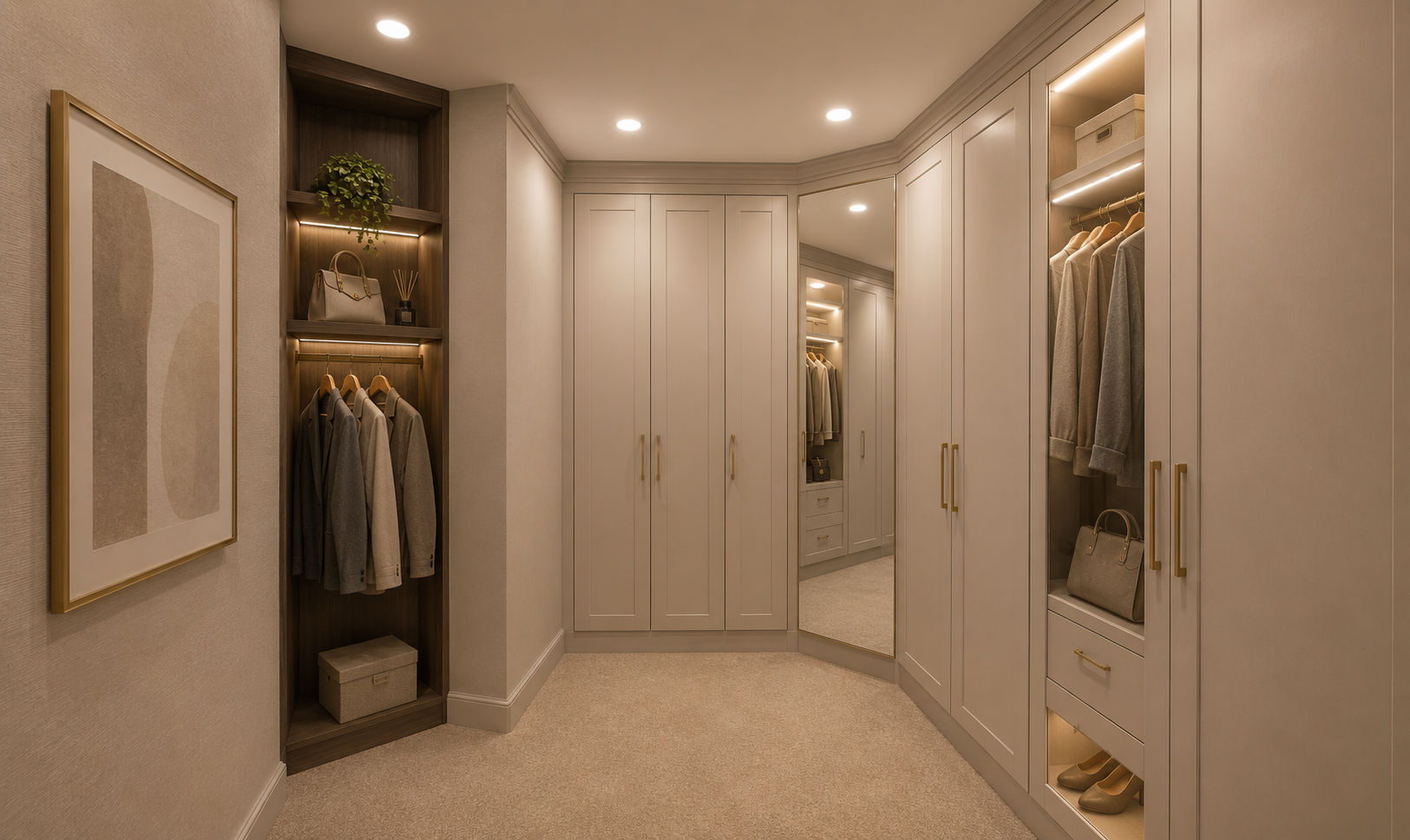
Replace with a live image from your asset library before publishing — placeholder shown for layout only.
The wardrobe is one of the largest pieces of furniture in most bedrooms, and the door mechanism you choose affects far more than looks — it shapes how much usable floor space you actually have, how the room feels day to day, and what your fitting and budget options look like. Sliding and hinged doors are the two main routes, and each suits a genuinely different set of bedrooms. This guide compares them directly, so you can match the mechanism to your room rather than your room to the mechanism.
Why Room Size Makes This Decision More Important Than It Looks
UK bedrooms are, on average, smaller than in most of Western Europe. RIBA's "The Case for Space" report found that UK new-build rooms are the smallest in Europe, and a typical UK double bedroom averages around 12.5m² — noticeably tighter than the 12–16m² typical in the Netherlands or the 14–18m² common in German new-builds, according to room-size research comparing UK and European housing stock. Under the Nationally Described Space Standard, the minimum floor area for a double bedroom is 11.5m², and a single bedroom must be at least 7.5m² — figures that leave very little spare room once a bed, storage, and walking space are all accounted for.
In a room that size, the floor space a hinged door's swing arc takes up isn't a minor detail — it can be the difference between a wardrobe that feels integrated into the room and one that dominates it. This is exactly why sliding doors have become the default recommendation for anything at or near the minimum standard bedroom size, and why the decision genuinely depends on your specific room rather than a general style preference.
Buying for the Long Term: Which Ages Better?
A fitted wardrobe is a longer-term purchase than most furniture in a bedroom, so it's worth thinking beyond the immediate style preference to how each option holds up and adapts over years of use.
Mechanism longevity
Well-fitted sliding tracks and well-hung hinges are both built to handle years of daily use. The more relevant long-term factor is fitting quality rather than mechanism choice — a well-installed wardrobe of either type should need only minor, occasional maintenance over its lifespan.
Adapting to a changing room
If there's a reasonable chance the room's use might change — a spare room that could become a home office, or a child's bedroom that will need reconfiguring as they grow — it's worth discussing with your designer how easily the wardrobe's internal storage can be adjusted later, since this is generally more flexible with a fitted design than a freestanding one, regardless of door mechanism.
Resale and buyer appeal
Both sliding and hinged fitted wardrobes are well-established, familiar choices that tend to read as a genuine asset to prospective buyers rather than a style risk, provided the finish is well-maintained and suits the room it's in — this is one area where the door mechanism itself matters far less than overall build quality and condition.
What Are Sliding Wardrobes?
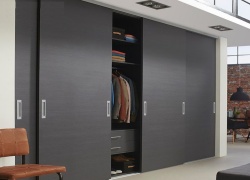
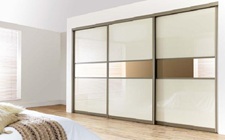
Sliding wardrobes use doors that run along a track — mounted at floor level, ceiling level, or both — rather than swinging open on hinges. Because the door moves sideways rather than outward, it doesn't need any floor clearance in front of the wardrobe to open, which is the main reason sliding doors are the default recommendation for smaller rooms.
| Sliding wardrobe type | Best suited to |
|---|---|
| Track-mounted | Most standard bedrooms — the most common configuration, running on a top or bottom rail |
| Corner units | Rooms with an awkward corner, using the space a hinged design would leave unused |
| Bi-fold sliding | Wider openings where full access to the whole wardrobe width matters |
What Are Hinged Wardrobes?
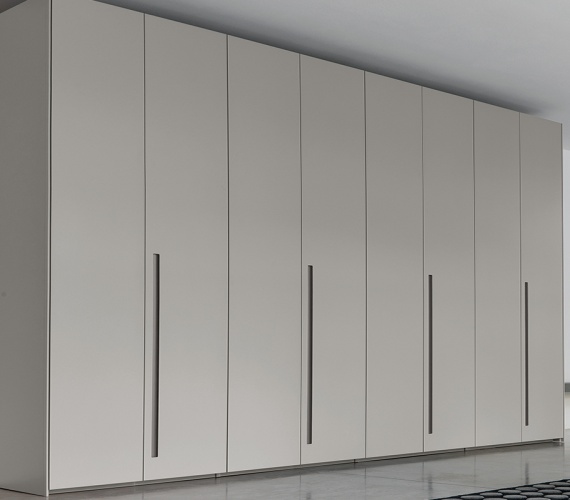
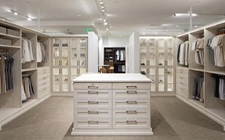
Hinged wardrobes use the traditional swinging-door mechanism, opening outward on hinges rather than sliding sideways. This is the more familiar cabinetry style, and it tends to suit larger bedrooms where the floor space a swinging door needs isn't competing with other furniture or walkways.
The main practical advantage of a hinged design is full, unobstructed access to the entire wardrobe interior at once — useful if you want to see everything inside without shifting a sliding panel across first. Hinged doors also generally offer a wider range of finish and panel styles, since the mechanism doesn't need to account for the weight-and-glide requirements a sliding track has to meet.
Sliding vs. Hinged: Side-by-Side Comparison
| Factor | Sliding | Hinged |
|---|---|---|
| Floor clearance needed | None — doors move sideways | Full door-width swing arc |
| Best suited to | Small to mid-sized bedrooms | Larger bedrooms with clear floor space |
| Access to interior | Partial — one section at a time | Full — entire interior at once |
| Visual style | Sleek, contemporary | Traditional to contemporary, widest style range |
| Door finish options | Good range, weighted toward panel and mirror finishes | Widest range, including detailed and painted panel styles |
| Mechanism to maintain | Track and rollers — keep clear of dust and debris | Hinges — may need periodic adjustment |
How to Decide: A Practical Framework
Start with your room's floor plan
Measure the clear floor space directly in front of where the wardrobe will sit. If a hinged door's full swing arc would block a walkway, a doorway, or another piece of furniture, sliding is the practical choice regardless of style preference.
Think about how you actually get dressed
If you like seeing your whole wardrobe interior at a glance, hinged doors suit that habit better. If you're used to a more organised, section-by-section approach, sliding doors won't feel like a compromise.
Match the mechanism to the room's style
Sliding doors tend to suit a contemporary bedroom aesthetic particularly well, with clean lines and minimal visual interruption. Hinged doors offer more scope for a traditional or detailed panel look if that's the direction the rest of the room is taking.
Measuring Your Bedroom Before You Choose
Getting accurate measurements before deciding avoids the most common wardrobe-buying mistake: choosing a style first and discovering afterwards that it doesn't actually fit the room comfortably. Measure and note down the following before making a decision.
- The full width, length, and height of the wall the wardrobe will sit against, including any obstructions such as radiators or skirting detail
- The position and swing direction of the bedroom door itself, so the wardrobe design doesn't conflict with it
- Clear floor space in front of the intended wardrobe position — this is the figure that determines whether hinged doors are realistic
- Ceiling height, particularly if you're considering a floor-to-ceiling sliding design
Keeping Either Option Running Smoothly
Both mechanisms are low-maintenance when properly installed, but each has a different weak point worth knowing about.
Sliding doors
Dust and debris in the track are the most common cause of a sliding door feeling stiff or noisy over time. A quick clean of the track every so often, and keeping an eye on roller wear, is usually all that's needed.
Hinged doors
Hinges can loosen slightly over years of regular use, which shows up as a door that doesn't sit flush or closes with a slight gap. This is normally a simple adjustment rather than a sign of a fault.
Door Finishes: What Each Mechanism Suits Best
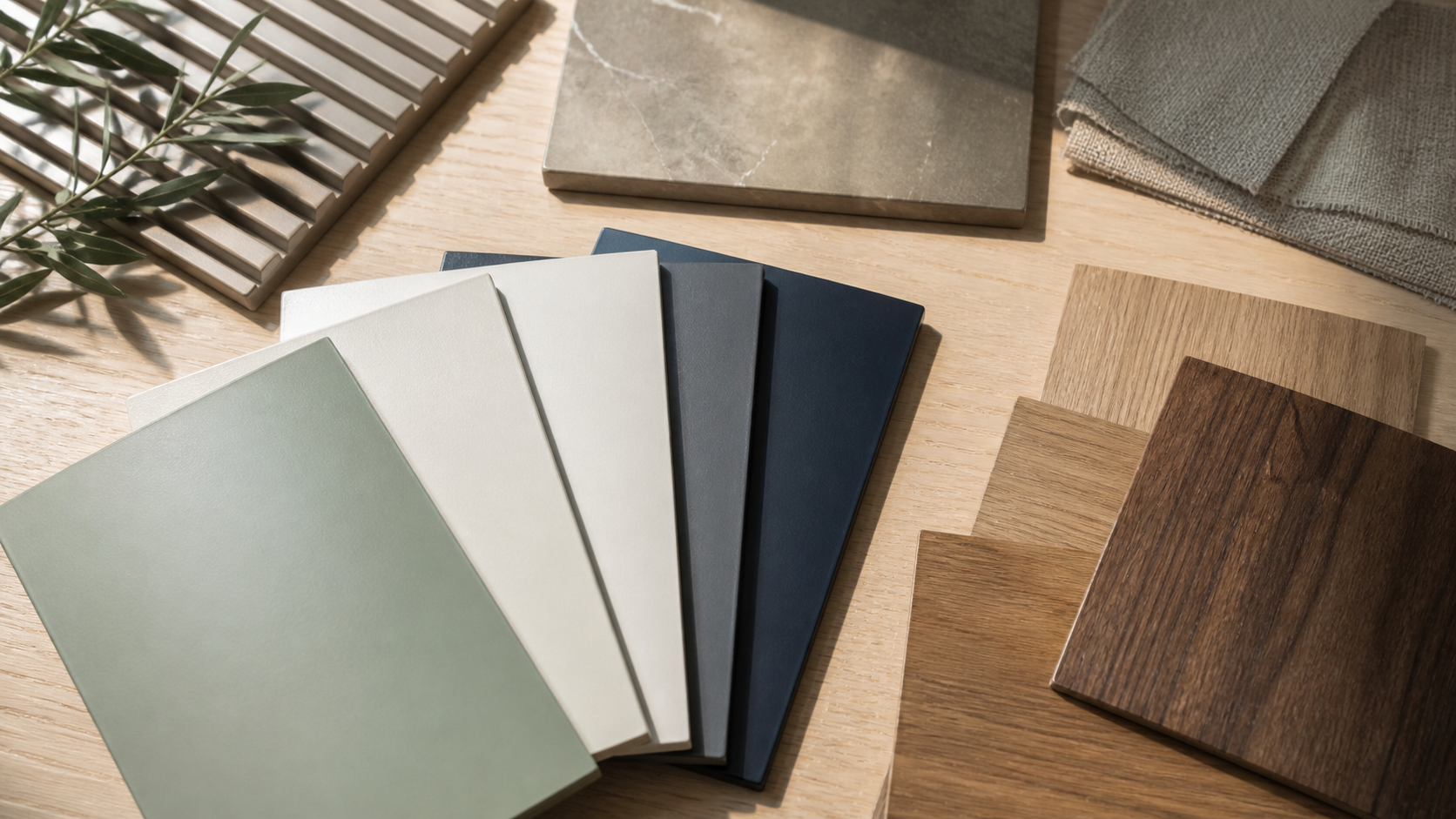
The door mechanism you choose also shapes which finishes are realistically available to you, since sliding and hinged systems handle weight and movement differently.
Mirror doors
Mirror is one of the most popular sliding door finishes, since a full-height mirrored sliding door does double duty as a dressing mirror while also visually opening up a smaller room — a genuine benefit given how much UK bedrooms tend to be on the compact side. Mirror can also be used on hinged doors, though a smaller individual panel rather than one continuous full-height surface.
High-gloss and matt panel finishes
Both mechanisms support high-gloss and matt panel finishes well, giving a clean, contemporary look either way. The main difference is scale: a sliding door presents as one wide, uninterrupted panel, while a hinged wardrobe's finish is broken up by each individual door width, which some homeowners prefer for a more traditional, detailed look.
Wood and painted panel doors
Hinged wardrobes generally offer the widest range of wood-effect and painted panel styles, including more detailed shaker-style or framed panel designs, since the door doesn't need to meet the same glide-and-weight requirements as a sliding track system.
How Room Shape Affects the Decision
Box rooms and single bedrooms
In a small box room — often close to the legal minimum bedroom size of 4.64m² — every inch of floor clearance matters, and a sliding wardrobe is almost always the more workable choice, since a hinged door's swing arc can easily eat into the room's only usable walking space.
L-shaped and awkward layouts
Rooms with an alcove, a chimney breast, or an awkward corner often suit a mixed approach — sliding doors across the main run, with a hinged section fitted into a corner or recess where a sliding track isn't practical to install.
Larger master bedrooms
In a bedroom with generous floor space — closer to or above the UK average of 12.5m² for a double, or into the larger dimensions typical of a dedicated master suite — a hinged wardrobe's swing arc is far less of a constraint, opening up the full range of door styles and finishes without the space trade-off that matters so much in a smaller room.
Loft and sloped-ceiling bedrooms
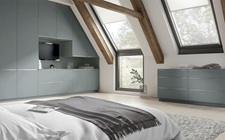
Sloped ceilings need particular care with either mechanism. A sliding track needs a straight, level run, while a hinged door needs enough headroom at its full swing height. Both are achievable with the right design, but it's worth discussing a sloped-ceiling layout with a designer before settling on either mechanism.
Cost Considerations Beyond the Door Mechanism
It's a common assumption that sliding wardrobes are simply cheaper than hinged ones, or vice versa — in practice, the mechanism itself is only one factor in the overall price. Door size, finish (mirror and glass typically cost more than painted panel), the number of internal storage components such as drawers and shelving, and whether the wardrobe is a fully bespoke fitted design or a more standardised configuration all affect the final cost more than the choice between sliding and hinged alone.
The more useful cost comparison is a like-for-like one: price the same bedroom dimensions, the same finish, and a comparable internal storage layout in both a sliding and a hinged configuration, and compare those two figures directly, rather than assuming one mechanism is inherently the budget option.
Professional Fitting vs. Self-Installation
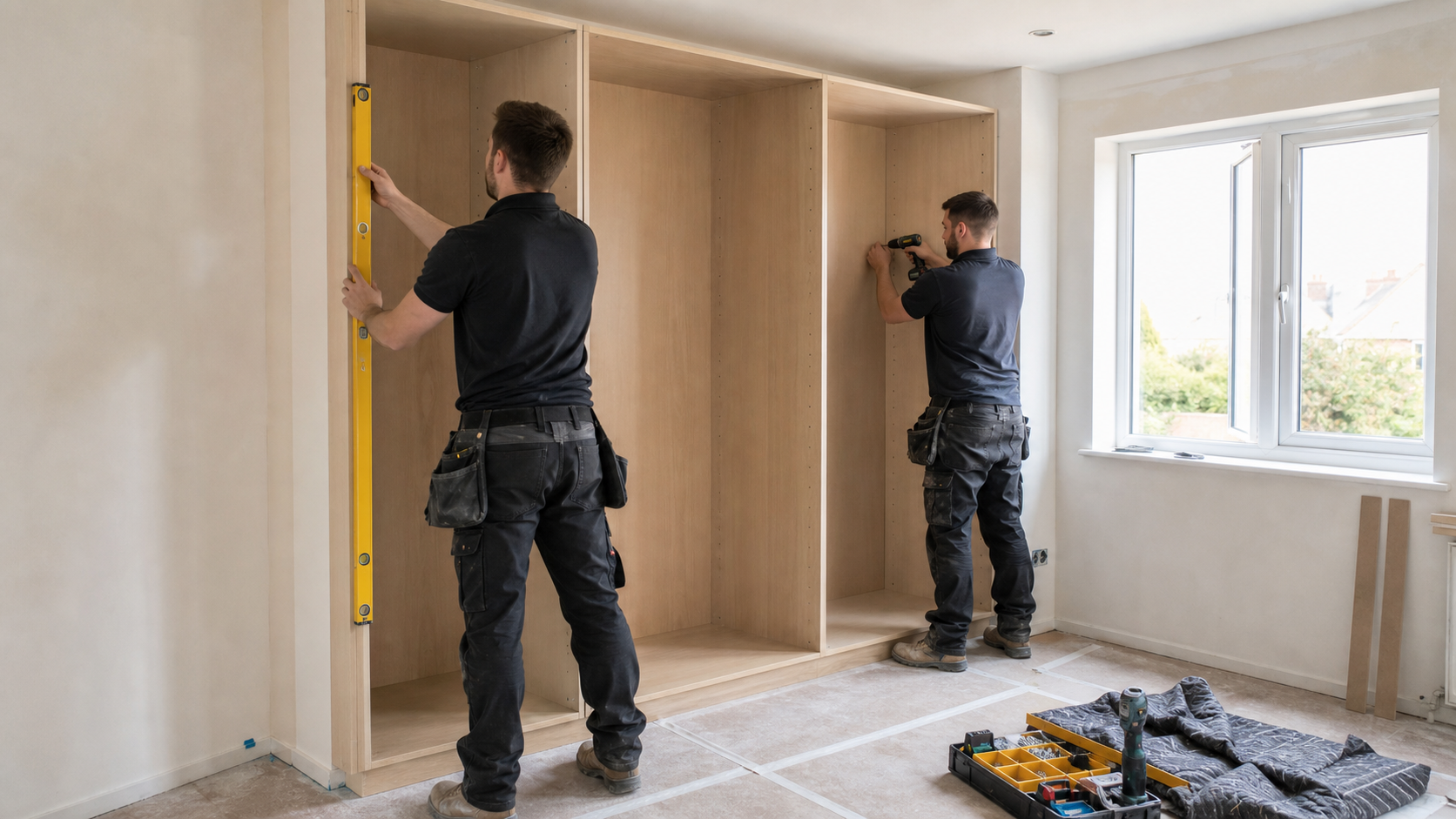
Both sliding and hinged fitted wardrobes are generally installed by a professional fitter as part of a made-to-measure service, particularly where the wardrobe spans a full wall or needs to work around obstructions like radiators, sloped ceilings, or uneven walls — which is common in most UK homes. Professional fitting ensures the track (for sliding) or hinge alignment (for hinged) is set correctly from the outset, which matters more for long-term smooth operation than it might seem at the point of installation.
A poorly aligned sliding track is one of the most common causes of doors that stick, jump, or run noisily, and a poorly hung hinged door is a common cause of gaps or doors that don't close flush — both are largely installation issues rather than product issues, which is why fitting quality is worth weighing as heavily as the mechanism itself when planning a new wardrobe.
Wardrobe Interior: Storage Works the Same Either Way
It's worth separating the door mechanism decision from the internal storage decision, since the two are largely independent. Hanging rail, shelving, drawer units, and shoe storage can all be configured the same way inside a sliding-door wardrobe as a hinged one — the mechanism affects how you access the space, not what's available inside it.
That said, the way you interact with the interior does differ slightly in practice. With a hinged wardrobe fully open, you can see and reach the entire width of the interior at once, which suits a layout with drawers or shelving spread across the full width. With a sliding wardrobe, you're generally working with one open section at a time, so it's worth thinking about which items you want most accessible and positioning them behind the section of track you'll open most often.
Common Mistakes to Avoid When Choosing
Choosing a style before measuring the room
Falling in love with a particular finish or style before confirming it's actually practical for your room's floor plan is the most common reason people end up unhappy with a new wardrobe. Measure first, then choose within what the room can genuinely accommodate.
Underestimating how much floor space a hinged door actually needs
It's easy to underestimate a swing arc on paper — walk the space out physically, or mark it on the floor with tape, before committing to a hinged design in a room where space is genuinely tight.
Assuming one mechanism is always cheaper
As covered above, finish, size, and internal configuration usually affect the price more than the door mechanism itself. Get a like-for-like quote rather than assuming.
Not checking ceiling height and floor levelness before installation
Both mechanisms depend on an accurate, level fit — a sliding track needs a straight run, and a hinged door needs a true frame to sit correctly. Uneven floors or walls, common in older UK properties, should be flagged to your installer before the design is finalised, not discovered during fitting.
Glass doors
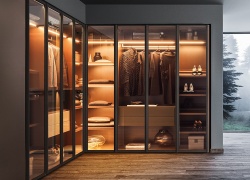
Glass — whether clear, frosted, or lacquered in colour — is available on both sliding and hinged systems, though it's more commonly specified on sliding wardrobes, where a large uninterrupted glass panel makes more of a visual statement than the same finish broken up across several hinged doors. Lacquered glass in particular has become a popular way to bring a strong colour into a bedroom without committing to painted walls.
Quick Decision Checklist
| If this describes your room… | Lean toward… |
|---|---|
| Box room, single bedroom, or floor space at a premium | Sliding |
| Larger master bedroom with generous clear floor space | Either — hinged opens up more style options |
| Awkward alcove or corner layout | Consider a mixed sliding/hinged design |
| Want to visually open up the room | Sliding with a mirror or lacquered glass finish |
| Prefer full, at-a-glance access to the whole interior | Hinged |
FAQ
Which type of wardrobe is best for small bedrooms?
Sliding wardrobes are generally the better fit for small bedrooms, since the doors don't need floor clearance to swing open, which frees up usable room space that a hinged wardrobe's swing arc would otherwise take up.
Are hinged wardrobes cheaper than sliding wardrobes?
It depends on size, door material and finish rather than the mechanism alone. Get a like-for-like quote for your exact bedroom dimensions and preferred finish before assuming either option is the cheaper route.
Do sliding wardrobe doors need more maintenance than hinged doors?
Both need occasional upkeep. Sliding doors run on a track that benefits from being kept free of dust and debris; hinged doors rely on hinges that can need adjustment over time. Neither is significantly higher-maintenance when properly installed.
Can I mix sliding and hinged doors in the same bedroom?
Yes — some fitted wardrobe designs combine a run of sliding doors with a separate hinged section, particularly where a room has an alcove or awkward corner better suited to one mechanism than the other.
How much clearance do hinged wardrobe doors need to open fully?
This depends on door width and hinge type, so it's worth checking with your installer before finalising a design — as a general rule, allow clear floor space in front of the wardrobe roughly equal to the door width.
Do sliding wardrobes make a small bedroom look bigger?
A mirrored sliding door in particular can help a small room feel more open, since it reflects light and doesn't require the visual and physical space a hinged door's swing arc takes up. This is one reason mirror is such a popular finish for sliding wardrobes in compact UK bedrooms.
Can a wardrobe be designed around a sloped ceiling?
Yes, both sliding and hinged wardrobes can be designed around a sloped ceiling, but it needs specific planning — a sliding track needs a level run and a hinged door needs enough headroom at full swing height. Discuss your room's exact dimensions with a designer before finalising the layout.
Related Reading
| Topic | Guide |
|---|---|
| Exploring fitted wardrobe designs and finishes | Fitted Wardrobes at Xeeni ? |
| High-gloss finishes for a contemporary bedroom | High Gloss Wardrobes Guide ? |
| Book a design consultation for your bedroom | Contact Xeeni ? |
Update the internal blog links above to match final published URLs.
Neither mechanism is objectively better — the right choice comes down to your room's floor plan and how you actually want to use the space. Measure your bedroom's clear floor space first, then decide: if a hinged door's swing arc would crowd the room, sliding is the practical route; if you've got the space and want full access to your wardrobe at a glance, hinged doors are worth the extra clearance they need. Whichever direction you're leaning, get your exact room dimensions measured properly before finalising a design — the right mechanism for your bedroom is ultimately a question your own floor plan answers, not a general rule about which style is more fashionable this year.