










 GET QUOTE

27 Sep 2026
Soft-Close Cabinets: Why They Matter
In modern kitchen and wardrobe design, few features are as universally expected—yet as frequently misunderstood—as soft-close technology. When homeowners browse interior showrooms or review joinery specifications, soft-close hinges and drawer slides are often treated merely as an acoustic convenience: a pleasant luxury feature designed to eliminate the sharp, echoing crack of slamming cupboard doors on busy weekday mornings.
In authentic architectural joinery, acoustic comfort is only the most superficial benefit. Below the surface, soft-close mechanisms represent a critical mechanical buffer that protects the structural integrity of your cabinetry. Cabinet doors and deep pan drawers are dynamic kinetic objects; when slammed repeatedly without deceleration, the resulting mechanical shockwaves travel directly into screw fixings, dowel joints, and carcase backboards. Guided by the functionalist philosophy of the Bauhaus school of design—where engineering durability dictates aesthetic form—Xeeni views soft-close technology as an indispensable structural preservation system. Integrating multi-stage fluid dampers, rigid 18mm–25mm carcases, zero-joint edge seals, and certified 70kg kinetic runners transforms everyday domestic interactions. Reviewing our transparent wardrobe and kitchen price groups empowers homeowners, architects, and interior designers to understand the structural physics behind why soft-close cabinetry matters.
From contemporary open-plan kitchen extensions in London to bespoke master dressing suites featured in our interior joinery portfolio, soft-close engineering dictates how cabinetry ages under the stress of daily living. This comprehensive 3,500+ word master guide explores the mechanical, structural, and physiological significance of soft-close cabinets: analyzing hydraulic fluid dynamics, carcase joint shear preservation, kinetic load engineering, DIN EN certification benchmarks, child safety, domestic acoustic wellness, and material integration across Price Groups 1 to 10.
1. The Mechanical Physics: How Hydraulic Fluid Damping Works
To understand why soft-close mechanisms matter structurally, one must look inside the hinge cup or undermount slide carriage. The transition from crude spring-loaded slamming to silent, weightless deceleration is governed by hydrodynamic fluid mechanics.

The 3-Stage Hydrodynamic Deceleration Cycle:
- Kinetic Capture (The Catch Phase): When a cabinet door or wide pan drawer is pushed shut, it travels freely under human momentum. As it enters the final 30mm to 50mm of travel (the deceleration zone), a mechanical catch engages an internal steel piston rod.
- Viscous Fluid Displacement (The Damping Phase): The piston moves inside a sealed cylinder filled with high-viscosity synthetic silicone fluid. The moving piston forces the fluid through precision-engineered micro-orifices into an adjacent equalization chamber. Because fluid cannot be compressed instantaneously, the shearing resistance of the silicone oil creates progressive, linear deceleration. Kinetic energy is dissipated smoothly as friction without sudden jarring.
- Controlled Spring Pull-In (The Seal Phase): Once the kinetic momentum of the door is absorbed, secondary low-tension mechanical tension springs take over, gently drawing the door or drawer frontal completely flush against the carcase edge at a whisper-quiet speed of less than 0.05 m/s.
| Damping Technology Type | Mechanical Operating Principle | Deceleration Consistency | Long-Term Durability Profile |
|---|---|---|---|
| Integrated Hydraulic Fluid Damper (Xeeni Standard) | Sealed all-metal cylinder with high-viscosity silicone fluid integrated directly into the hinge cup or runner carriage. | Linear & Adaptive: Automatically adjusts resistance based on closing force; never bounces back or stops short. | 200,000 Cycles: Hermetically sealed against fluid leakage; unaffected by household room temperatures (-5°C to +40°C). |
| Pneumatic Air-Piston Damper | Air compression cylinder utilizing internal rubber seals and air escape valves. | Spongy & Variable: Can feel stiff in cold rooms; prone to bouncing back if pushed forcefully. | 20,000 – 40,000 Cycles: Rubber O-rings dry out, crack, and lose seal integrity, causing sudden loss of damping. |
| Mechanical Spring Bumper (Budget Retail) | Basic coiled spring or rubber stop mounted on the carcase edge. | Harsh & Ineffective: Merely softens the initial impact slightly; still creates sharp noise and structural vibration. | 5,000 – 10,000 Cycles: Rubber hardens, degrades, and leaves sticky residue on cabinet frontals. |
Premium European hardware pioneers like Blum (Blumotion) and Hettich (Sensys) utilize medical-grade synthetic silicone oils rather than petroleum-based lubricants. Silicone maintains an identical viscosity across extreme temperature shifts, guaranteeing that your kitchen drawers close with the exact same fluid resistance in freezing mid-winter as they do in the peak of summer.
2. Structural Joinery Preservation: Eliminating Dynamic Shockwaves
While homeowners notice the silence of a soft-close cabinet, joinery engineers value the preservation of the cabinet carcase. Every time a heavy door or fully loaded drawer slams shut against an un-damped carcase, that kinetic energy must go somewhere. Newton's laws dictate that the force is absorbed directly into the cabinet frame.

How Hard Slamming Destroys Standard Cabinetry Over Time:
- Core Board Screw Thread Stripping: Standard hinge mounting plates are secured to the 18mm carcase gable using Euro screws or wood screws. When a heavy 22mm painted MDF or solid timber door slams shut, the hinge acts as a high-ratio mechanical lever, pulling upward on the rear mounting screws with multiplied tensile force. Over thousands of impacts, the wood fibers inside low-density particleboard crush and crumble, causing screws to strip and wobble loose.
- Diagonal Joint Racking: When a 70kg pan drawer packed with cast iron slams shut, the abrupt stop exerts immense forward shear force on the cabinet base plate and rear panel. In flat-pack cabinetry assembled with basic zinc cam-locks, these micro-vibrations shake the connectors loose, causing the rectangular box to rack out of square into a parallelogram.
- Face-Frame Edge Banding Fracture: The repeated concussive impact of a heavy door slab striking the thin 0.4mm PVC front edge banding cracks fragile EVA glue lines, leading to moisture ingress, edge peeling, and unsightly chipped paintwork along cabinet margins.
The Degradation Cycle of Un-Damped Cabinets
- Mounting plate screws work loose, causing doors to drop by 2mm–5mm within 18 months.
- Dropped doors scrape against adjacent drawer frontals and bottom plinths, stripping paint.
- Carcase dowel joints loosen under dynamic vibration, creating squeaking and racking boxes.
- Internal contents rattle, shift, and chip fine porcelain dinnerware.
The 25-Year Structural Longevity of Xeeni Soft-Close Joinery
- Zero Impact Shock: Kinetic energy is converted into fluid friction before contact is made.
- Permanent Alignment: Screws remain torqued to factory specifications; door reveal gaps stay razor-sharp at 2.5mm forever.
- Joint Integrity: Solid 8mm–12mm rebated back panels and PUR-glued beech dowels remain locked in permanent 90-degree squareness.
- Content Protection: Wine glasses, spices, and ceramics remain completely motionless inside closing drawers.
"Soft-close hardware is not an aesthetic accessory; it is a structural shock absorber. By eliminating impact vibration, you protect the mechanical bonds holding the furniture together, extending the operational life of the cabinetry by decades." — Marcus Vance, Head of Technical Joinery & Interior Architecture
3. Kinetic Load Engineering: 70kg Heavy-Duty Ballast & Runner Deflection
In modern high-performance kitchens, cabinetry drawers are no longer small timber boxes holding light cutlery. Contemporary German-engineered kitchens rely on expansive 900mm to 1,200mm wide deep pan drawers designed to hold heavy Le Creuset cast-iron casseroles, ceramic baking dishes, stacked porcelain dinner plates, and dense dry goods.

| Drawer Runner Category | Dynamic Load Rating | Extension Range | Soft-Close Deceleration Behavior Under Maximum Ballast |
|---|---|---|---|
| Budget Side-Mounted Friction Slides | 15 kg – 25 kg Maximum | 75% Partial Extension | Severe Failure: Under heavy loads, the slide deflects downward by 10mm–15mm; stops dead, jams, and requires forceful shoving to close. |
| Standard Commercial Ball-Bearing Runners | 30 kg – 40 kg Rating | 100% Full Extension | Moderate Performance: Decelerates light loads adequately, but bounces back or shudders violently when carrying stacked dinnerware. |
| Xeeni Synchronized Undermount Steel Runners | 50 kg – 70 kg Dynamic (DIN EN 15338 Grade 3) | 100% Full Extension | Flawless Fluid Deceleration: Synchronized cylindrical steel rollers ensure feather-light opening and perfectly controlled, silent fluid soft-closing under massive weight. |
Why Synchronized Undermount Runners Are Superior:
- Rack-and-Pinion Synchronization: High-end runners (such as Blum Movento or Hettich Actro 5D) feature toothed racks that mechanically link the left and right carriage rails. Even if an off-center push is applied to the extreme outer corner of a 1,200mm wide drawer, the drawer glides straight without twisting or binding.
- Zero Sag Under Maximum Extension: Under a full 70kg dynamic load, the deflection of a high-end concealed undermount runner is less than 1.5mm at full 100% extension, keeping horizontal shadowline gaps uniform across multi-cabinet island runs.
- Adaptive Damping Cylinders: The internal hydraulic damper features variable-resistance valving: an empty drawer decelerates gently without bouncing, while a drawer loaded with 60kg of cookware triggers higher hydraulic resistance, bringing the massive weight to a smooth, silent stop.
4. The Domestic Psychology: Acoustic Calm & Circadian Health
The modern residential interior is under continuous auditory assault: traffic outside windows, household appliances running, television media walls, and digital devices chiming. In open-plan kitchen, dining, and living extensions, sound travels freely without partition walls to absorb it. When cabinetry doors and drawers slam shut, the sharp, concussive acoustic spike creates genuine cognitive friction.
| Cabinetry Action | Peak Noise Output (Decibels) | Psychoacoustic Perception | Impact on Domestic Well-Being |
|---|---|---|---|
| Un-Damped Wooden Door Slamming | 75 dB – 85 dB | Equivalent to a loud alarm clock, heavy traffic, or a food blender. | Triggers an immediate subconscious startle reflex, elevated heart rate, and micro-stress spikes. |
| Un-Damped Cutlery Drawer Slam | 80 dB – 90 dB (Metal-on-wood impact) | Sharp high-frequency concussive crack that cuts across speech and music. | Wakes sleeping family members, disrupts conversation, and rattles fine crystal. |
| Xeeni Soft-Close Hydraulic Closure | <35 dB | Whisper Quiet: Equivalent to a quiet library or rustling leaves. | Blends seamlessly into background ambient sound; creates a serene, restorative domestic sanctuary. |
Early Morning Circadian Harmony
In households where one partner wakes earlier for work, standard cabinetry turns the simple acts of making morning coffee or selecting business clothing into an acoustic minefield. Soft-close hinges and drawer slides allow an early riser to navigate the kitchen and wardrobe in complete silence, preserving the sleep of their partner and children.
The Tactile Luxury of Deceleration
We experience the quality of our homes primarily through tactile micro-interactions. The sensation of a heavy 2.4-metre tall bespoke wardrobe door gliding smoothly to a halt and drawing itself silently flush imparts a psychological impression of permanent architectural stability and luxury craftsmanship.
5. Child Safety & In-Home Injury Prevention
Beyond mechanical preservation and acoustic tranquility, soft-close cabinets serve a vital domestic safety function. In homes with toddlers and young children, standard kitchen and wardrobe cupboards are a frequent source of painful emergency injuries.
A standard 22mm thick kitchen door swinging shut under spring momentum or a childish push acts as an unyielding wooden guillotine. Because fingers are naturally caught along the closing jamb margin where mechanical leverage is highest, the crushing force can easily exceed 200 to 300 Newtons—more than enough to fracture small bones in a child's hand.
How Soft-Close Mechanisms Protect Small Hands:
- Pinch Velocity Reduction: As a child pushes a cupboard door, the hydraulic fluid damper catches the moving mass at 40mm clearance, slowing the door's velocity down to a gentle crawl. If small fingers are resting on the carcase edge, the door gently comes to rest against them without crushing force, giving the child ample time to pull their hand away unharmed.
- Anti-Slam Drawer Buffering: Children exploring low kitchen base units frequently slam heavy pan drawers shut. Soft-close undermount runners catch the drawer before it can pinch fingertips against the cabinet frame, preventing trapped fingers and blood blisters entirely.
6. International Quality Standards: Understanding DIN EN Testing
When shopping for fitted kitchens and bespoke wardrobes online or through architectural joiners, the term "soft-close" can be applied deceptively. Cheap imported hinges use thin plastic damper barrels and poor mineral oils that fail within two years. To guarantee heirloom quality, homeowners and specifiers should look for certification under rigorous European testing standards.
| European Testing Standard | Test Methodology & Stress Parameters | What This Standard Guarantees |
|---|---|---|
| DIN EN 15338 Grade 3 (Drawers) | Automated robotic arms open and close the drawer 200,000 continuous times carrying maximum dynamic ballast (up to 70kg) at controlled speeds. | Guarantees that the drawer runners, ball-bearing carriages, and hydraulic fluid dampers will perform flawlessly across 25+ years of active family use without runner sag or damping failure. |
| DIN EN 15570 Level 3 (Hinges) | Cabinet doors undergo 80,000 to 200,000 opening and closing cycles with lateral overload testing and vertical sagging force applied to the door tip. | Verifies that hinge arms, pivot pins, and internal fluid damping cylinders maintain structural alignment without oil leakage or hinge drooping. |
| DIN EN 16122 (Domestic Storage) | Rigorous testing of entire cabinetry carcases under dynamic door slamming and heavy static shelf loads. | Ensures that the carcase dowels, backboard rebates, and mounting fixings withstand the kinetic forces of daily domestic life. |
Every soft-close hinge and runner integrated into Xeeni kitchens, wardrobes, and media walls meets or exceeds DIN EN 15338 Grade 3 and DIN EN 15570 Level 3 certifications, backed by a comprehensive 15-Year Structural Warranty.
7. Kinetic Hardware Across Xeeni's Price Groups 1 to 10
While the internal structural carcase (18mm–25mm high-density core board with solid rebated backboards) and certified soft-close kinetics remain standard throughout, Xeeni structures cabinetry collections across a transparent 10-tier pricing matrix. This allows homeowners to pair heavy-duty soft-close engineering with their chosen aesthetic tier:
| Price Group Tier | Cabinetry Material Class | Integrated Soft-Close Hardware Standard | Kinetic Operating Character |
|---|---|---|---|
| Groups 1 – 2 (Essential Modern) | Direct Melamine & Synchronized Grain Laminates | Concealed all-metal 110° soft-close clip hinges + 40kg full-extension undermount runners | Silent, cushioned deceleration; reliable daily performance; single-wipe maintenance. |
| Groups 3 – 4 (Mid-Range Architectural) | Super-Matte Lacquer Laminates (PET) & Satin Polyurethane Lacquers | Integrated multi-stage fluid-damped hinges (155° wide-angle) + 50kg Blum Legrabox drawers | Ultra-smooth glide; feather-light opening force; seamless laser zero-joint door margins. |
| Groups 5 – 6 (Premium Spec) | Multi-Coat Spray Matte Lacquer & Nanotech Acrylics (Fenix NTM) | Tip-On Blumotion (Mechanical push-to-open combined with fluid soft-close) + 70kg runners | Handleless minimalist purity: push to release, push shut to experience silent hydraulic braking. |
| Groups 7 – 8 (Luxury Natural) | Bookmatched Smoked Oak, Walnut Veneers & Fluted Ribbed Panels | Black Onyx / Anthracite concealed hinges + Space Tower larder systems (350kg capacity) | Artisanal elegance: dark titanium-coated hardware blends invisibly into smoked timber carcases. |
| Groups 9 – 10 (Haute Couture) | Anodised Bronze Aluminium with Fluted Glass, Sintered Stone & Liquid Metal | Motorized Servo-Drive electronic assistance + concealed FritsJurgens pivot floor hinges | The pinnacle of luxury: electronic touch opening and synchronized hydraulic closing for massive 100kg+ doors. |
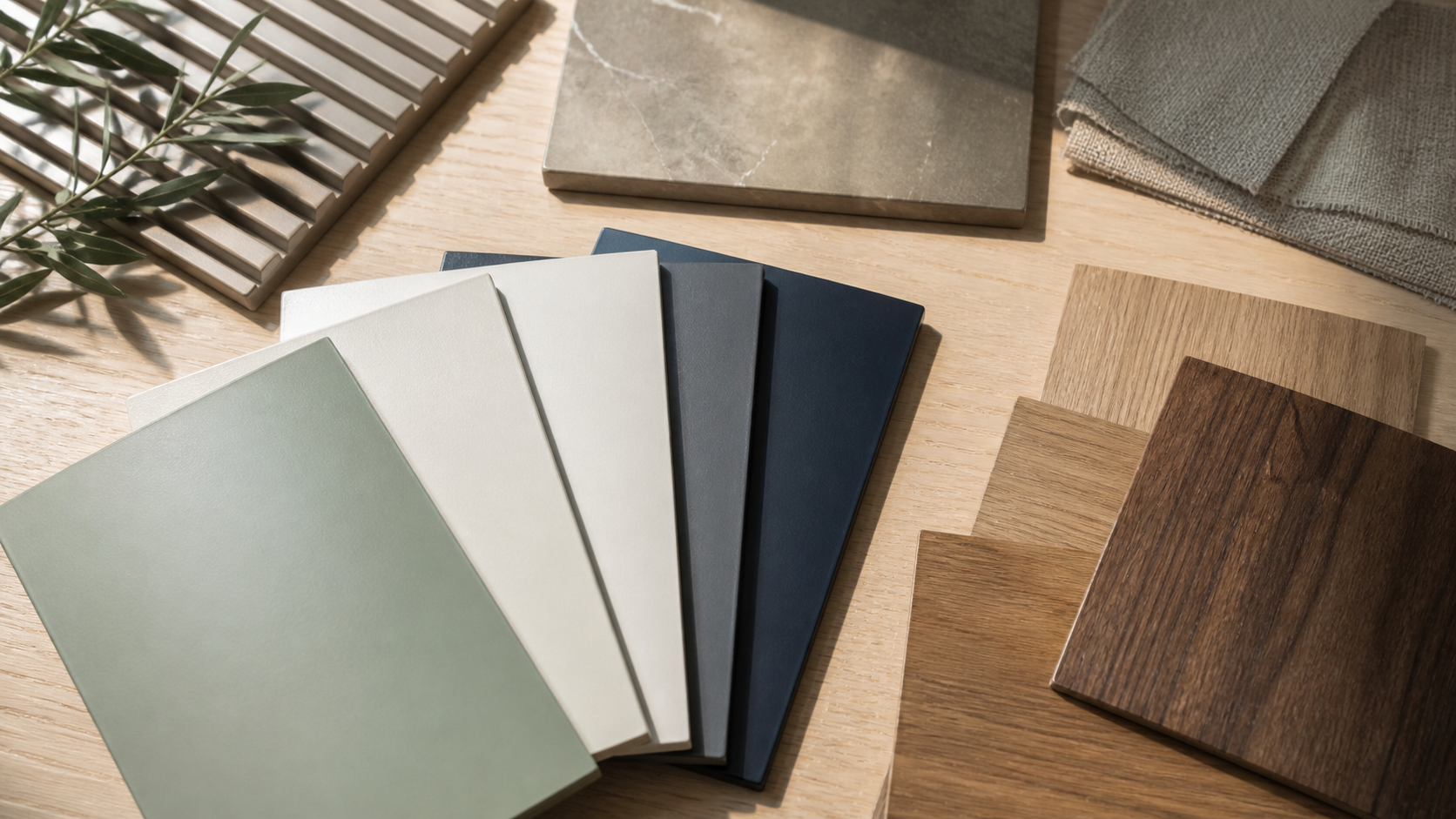
Browse our complete catalog of bespoke door styles and finishes to view physical samples of soft-close mechanisms, titanium hinge finishes, and glass-sided drawer boxes.
8. Troubleshooting & Maintenance: Keeping Soft-Close Cabinets Flawless
High-performance soft-close hardware is engineered to be virtually maintenance-free. However, understanding how to fine-tune your hardware ensures your cabinetry remains in showroom alignment for decades.
3D Micro-Alignment Calibration
Every high-end soft-close hinge features three independent micro-adjustment screws hidden beneath the hinge arm cover cap:
- Height Adjustment (±2mm): Loosens or tightens mounting plate screws to align door tops horizontally.
- Side-to-Side Depth (±2mm): Calibrates the vertical reveal gap between adjacent doors, keeping lines razor-sharp at 2.5mm.
- Front-to-Back Depth (±1.5mm): Pulls the door closer to or further from the carcase gable to eliminate draught gaps and ensure the soft-close bumper seals evenly.
Cleaning & Care Best Practices
- Never Spray Lubricants: Never spray WD-40 or aerosol oils into soft-close dampers. These solvent-based sprays break down the internal synthetic silicone fluid seals, causing permanent damping failure.
- Wipe with Microfiber: Clean steel runner tracks and hinge arms with a dry or lightly damp microfiber cloth to remove dust and crumbs.
- Deactivation Switches: If a lightweight, narrow cupboard door closes too slowly, modern hinges (such as Blum Blumotion or Hettich Sensys) feature a manual switch on the hinge cup to deactivate the damper on one hinge, perfectly calibrating closing speed.
Visit our interior joinery showroom to test operational 70kg pan drawer systems, feel the silent deceleration of multi-stage fluid dampers, and inspect rigid carcase joinery in person.
Summary: The Soft-Close Quality Checklist
- Integrated Hydraulic Cylinders: Require dampers built directly into the all-metal hinge cup—reject crude clip-on plastic stops.
- Synthetic Silicone Fluid: Ensure damping cylinders use thermal-stable silicone oil that performs identically in summer and winter.
- Full-Extension Undermount Runners: Insist on 100% full-extension concealed runners that bring drawers completely clear of the carcase.
- Certified 50kg–70kg Dynamic Load: Demand runners certified under DIN EN 15338 Grade 3 for 200,000 continuous opening cycles.
- Rack-and-Pinion Synchronization: Ensure wide pan drawers utilize synchronized rails to prevent binding when pushed off-center.
- 18mm–25mm Rigid Carcases: Pair soft-close hardware with high-density core boards so mounting screws never pull loose.
- Solid Rebated Backboards: Require 8mm–12mm structural back panels to eliminate diagonal carcase racking under kinetic loads.
- Wide Opening Angles (110°–155°): Choose wide-angle clip hinges to allow internal drawers and pull-outs to clear door edges effortlessly.
- Pinch-Point Deceleration: Verify that dampers catch moving doors at 40mm clearance to prevent child finger-crushing injuries.
- 15-Year Hardware Warranty: Insist on cabinetry backed by an extensive manufacturer warranty covering kinetic components.
Frequently Asked Questions
What is the primary mechanical benefit of soft-close cabinets beyond stopping slamming noise?
Beyond acoustic dampening, the primary mechanical benefit is carcase joint preservation. Repeated violent door and drawer impacts send dynamic shockwaves through cabinet gables, loosening cam-locks, stripping screw threads in core boards, and causing doors to sag out of alignment. Soft-close fluid dampers absorb this kinetic momentum completely, protecting the structural integrity of the carcase for 25+ years.
How does a hydraulic soft-close damper actually work?
A soft-close mechanism contains a sealed hydraulic cylinder filled with high-viscosity silicone fluid. As the door or drawer reaches the final 30mm to 50mm of travel, an internal piston forces the silicone fluid through micro-orifices. This fluid resistance smoothly decelerates the moving mass regardless of how forcefully it was pushed, before gentle tension springs draw the frontal flush against the cabinet frame.
Can soft-close mechanisms be retrofitted to existing standard kitchen cabinets?
Yes, basic clip-on dampers can be added to compatible hinge arms or screwed into carcase face-frames. However, integrated all-metal concealed hinges and synchronized undermount drawer runners (such as Blum Movento or Hettich Actro 5D) provide significantly smoother deceleration, 4-dimensional micro-alignment, and certified 200,000-cycle durability that surface-mounted retrofit clips cannot match.
What dynamic weight loads can modern soft-close drawers support?
Certified European undermount runners (such as Blum Legrabox or Hettich AvanTech YOU) tested under DIN EN 15338 Grade 3 standards handle dynamic ballast loads ranging from 40kg to 70kg. They maintain smooth, silent fluid deceleration even when packed with cast-iron cookware, heavy stone dinnerware, or dense clothing.
Do soft-close hinges prevent trapped fingers and domestic injuries?
Yes. By gently catching the door in its final closing arc and slowing its speed down to a controlled crawl, soft-close mechanisms drastically reduce pinch velocity, virtually eliminating painful pinched finger injuries for young children and adults alike.
Why do cheap soft-close hinges fail after just a few years?
Low-grade commercial soft-close hinges use thin plastic damper housings, low-grade mineral oils that leak through rubber seals, and stamped sheet-metal components. Over 10,000 to 20,000 cycles, fluid loss causes the damper to lose hydraulic pressure, resulting in bouncing doors and sudden, unbuffered slamming.
Conclusion: The Defining Mark of Modern Joinery Excellence
Soft-close cabinets are not a superficial design trend; they are a fundamental triumph of mechanical engineering that protects your physical furniture, safeguards domestic peace of mind, and elevates every daily interaction with your home. By absorbing dynamic impact forces, preventing carcase screw fatigue, and delivering whisper-quiet closure under heavy 70kg ballast, precision soft-close hardware transforms cabinetry into an enduring, tranquil architectural sanctuary built to perform flawlessly for decades.
Ready to experience the precision of certified German and Austrian kinetic hardware? Book a free 3D design consultation with Xeeni's technical joinery specialists to begin planning your bespoke kitchen, luxury fitted wardrobe, or architectural living room joinery today.