







 GET QUOTE
Home / Editorial / TV Wall Ideas: Design, Mounting & Installation Guide for a Modern Living Room
23 Sep 2026
TV Wall Ideas: Design, Mounting & Installation Guide for a Modern Living Room

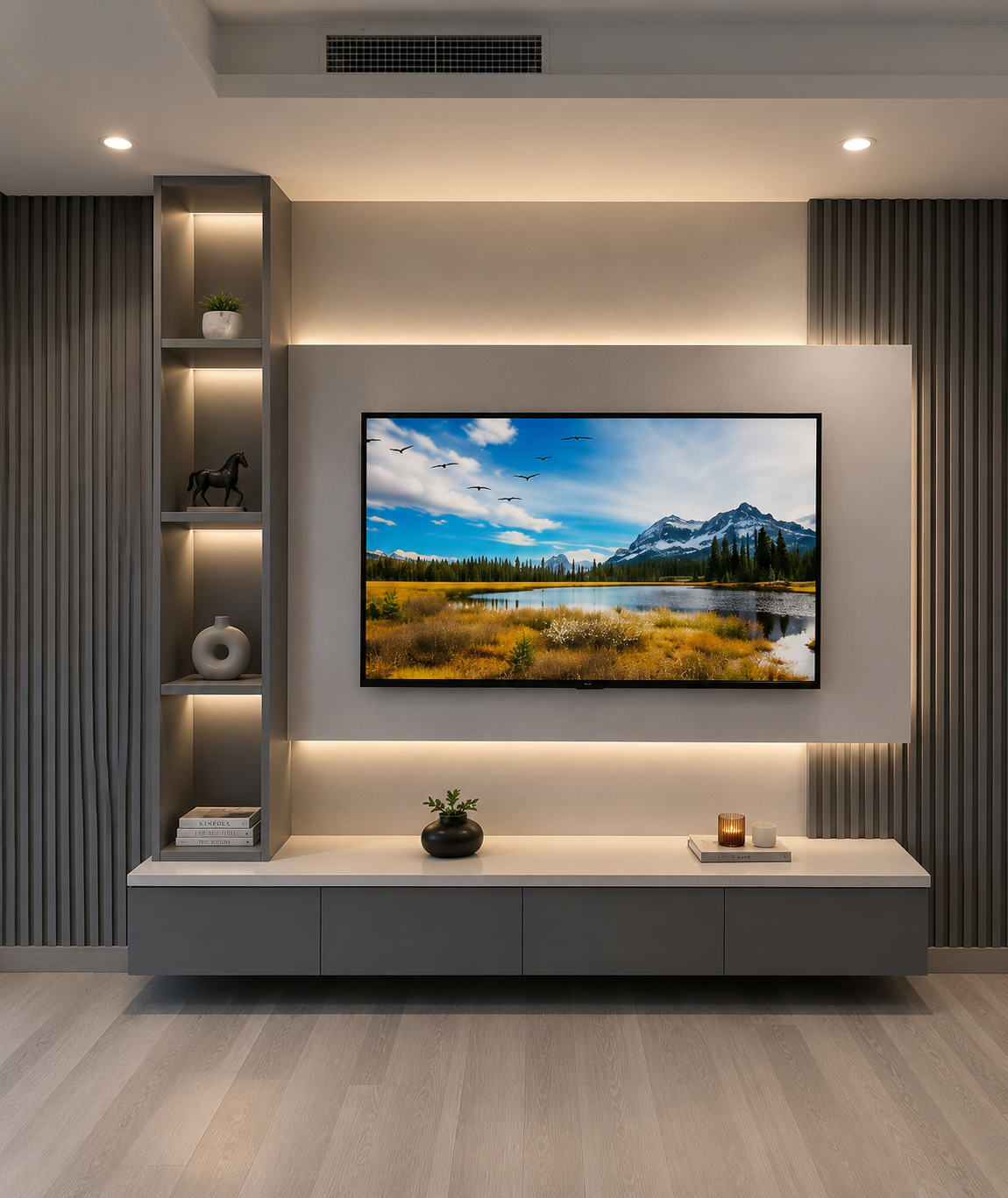
Replace with a live image from your asset library before publishing — placeholder shown for layout only.
A well-planned TV wall does more than hold a screen — it becomes the focal point of a living room, cuts down on trailing cables, and can make a modern space feel considerably more finished than a TV sat on a stand ever will. But "TV wall" covers a genuinely wide range of approaches, from a simple bracket on a stud wall through to a fully bespoke media wall unit with concealed cabling and integrated storage. This guide walks through the main design options, what actually goes into a safe installation, and the planning steps worth getting right before you start.
Why a TV Wall Is Worth Planning Properly
A TV mounted without much thought — the wrong height, no plan for cables, a bracket unsuited to the wall type — tends to become one of the more obvious things wrong with a living room, precisely because it sits at eye level and stays visible every day. Getting the design and installation right the first time avoids re-drilling walls, re-routing cables, or living with a permanently visible tangle behind the screen.
Popular TV Wall Design Approaches
| Design | What it involves | Best suited to |
|---|---|---|
| Floating TV wall | TV mounted flush to the wall with a slim bracket, minimal visible hardware | Clean, minimalist rooms wanting the screen as the sole focal point |
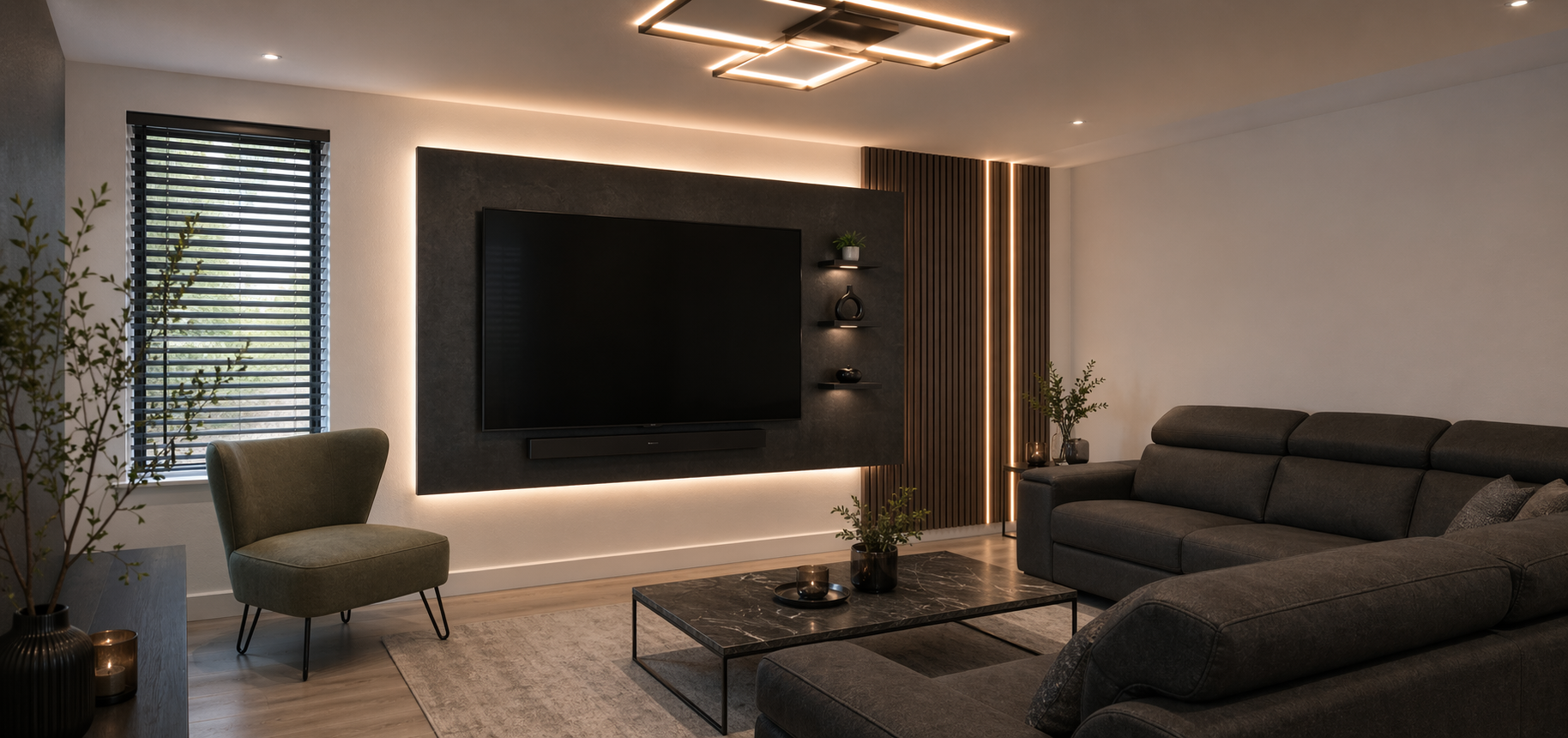
| Media wall unit | Bespoke fitted unit combining the TV, storage, and often a fireplace or feature panel | Living rooms wanting integrated storage and a single design statement |
| Recessed TV wall | TV set into a shallow cavity built into the wall or unit | A fully flush, integrated look — usually needs a stud wall build-out |
| Corner TV wall | Uses an angled or corner-specific bracket to make use of an otherwise wasted corner | Awkward room layouts where no single flat wall works well |
Choosing a Design for Your Room
Room size and layout
A smaller living room generally suits a simpler, flatter design — a floating TV wall keeps visual weight to a minimum, whereas a full media wall unit can dominate a compact space. In a larger room, a media wall unit can genuinely anchor the space and give it a clear focal point.
TV size and screen weight
According to UK ownership data from Statista/Kantar's 2023 survey, 50–59 inch screens are now the most commonly owned TV size in British homes, closely followed by 43–49 inch sets. A screen in that range is a reasonable planning reference for a standard UK living room, though your own room's viewing distance and wall width should always be the deciding factor rather than a general average.
Personal style and how the room is used
A media wall unit suits households that want integrated storage for consoles, books, or ornaments alongside the screen. A minimal floating design suits a room where the TV should recede into the background when it's off. There's no universally "correct" choice — it comes down to how the room is actually used day to day.
What Goes Into a TV Wall Installation
TV mount and wall plate
The mount is the structural foundation of the whole installation, and needs to be rated for your TV's specific weight and VESA hole pattern — not just its screen size. The wall plate that anchors the mount to the wall needs to suit your wall type: stud (timber or metal frame), solid masonry, or dot-and-dab plasterboard over masonry all need different fixings to hold securely.
Mount type
| Mount type | What it offers |
|---|---|
| Fixed | Flattest profile, no adjustment — suits a wall directly facing the main seating position |
| Tilt | Angles downward, useful when the TV sits higher than natural eye level |
| Full-motion | Swings and extends from the wall, best for rooms with more than one viewing angle |
Cable management
Cable routing needs deciding before installation, not after — retrofitting concealed cabling into an already-mounted TV wall is far more disruptive than planning it in from the start. Options range from a simple surface-mounted cable cover through to cables run inside the wall cavity via an in-wall rated power kit, up to a fully bespoke media wall unit designed with cable routing built into the cabinetry.
Power and surge protection
A power strip or surge protector at the TV end protects the screen and any connected devices from electrical spikes — a relatively small addition worth including in the initial plan rather than an afterthought once everything else is fitted.
Design team note: The single most common regret we hear from customers who fitted a TV wall themselves isn't the mount or the design — it's cable planning. Deciding your cable route before the TV goes up, rather than working around it afterwards, is the one step worth spending the most time getting right.
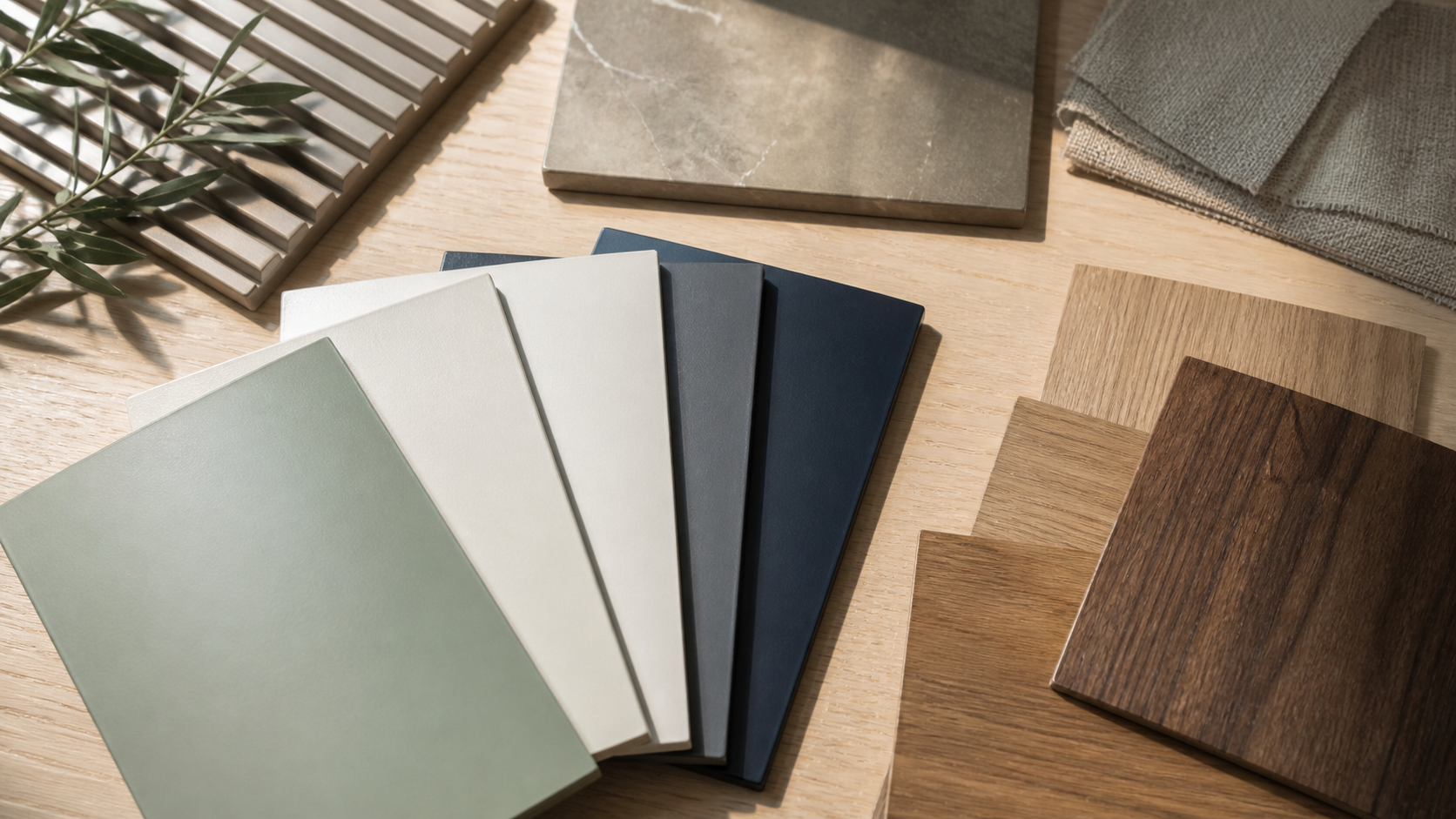
Finishes and Materials for a Media Wall Unit
If you're going beyond a simple bracket toward a full media wall unit, the finish sets the tone for the whole room far more than the TV itself does.
Wood and veneer panels
Warm wood tones or veneer panelling behind and around the TV soften what can otherwise be a fairly hard-edged wall of screen and cabinetry, and pair well with both contemporary and more traditional living room styles.
Stone and textured cladding
A textured stone or feature-panel cladding, often used around an integrated fireplace within the media wall, adds visual depth and a natural material contrast against a flat-screen TV's uniform surface.
High-gloss and painted panels
A high-gloss or matt painted finish gives the cleanest, most contemporary look, and is a common choice for a minimalist floating TV wall where the goal is for the screen to be the only real focal point.
Integrating a Fireplace or Feature Lighting
A growing number of media wall designs combine the TV with an electric fireplace or feature lighting built into the same unit, creating a single cohesive focal point rather than two competing ones. This works well practically as long as the fireplace and TV are positioned with enough vertical separation to avoid heat affecting the screen over time — check the TV manufacturer's guidance on safe clearance from a heat source before finalising the layout.
LED strip lighting built into shelving or along the edge of a media wall unit is another popular addition, both for ambience when the TV isn't in use and to reduce eye strain from viewing a bright screen in an otherwise dark room in the evening.

Replace with a live image from your asset library before publishing — placeholder shown for layout only.
Matching a TV Wall to Your Room's Style
Contemporary and minimalist living rooms
A flush-mounted floating TV wall with a slim bracket and minimal visible hardware suits this style best. Keep the wall around the screen simple — a single accent colour or a plain painted finish — so the TV itself doesn't compete with additional detailing.
Warmer, more traditional living rooms
A media wall unit with wood-toned panelling and integrated shelving tends to suit a warmer, more traditional room better than a stark floating mount, since it gives the eye more to rest on around the screen rather than a single flat panel.
Open-plan living and dining spaces
In an open-plan room, a media wall unit can do double duty as a visual room divider, giving the living area a defined boundary without needing a full partition wall — worth considering if the TV wall is one of the few fixed elements separating two zones of an open-plan space.
Budget Considerations
Cost varies enormously across this category, from a basic fixed bracket and a self-installed mount through to a fully bespoke media wall unit with integrated fireplace, lighting, and cabinetry built and fitted by a professional joiner. Rather than working to a single figure, it's more useful to budget across three separate elements: the mount and any cabling hardware, the finish and materials if you're going beyond a simple bracket, and installation labour if you're not fitting it yourself.
A sensible approach is to decide your priority first — a clean, simple screen mount, or a genuine room-defining media wall feature — since that decision affects the budget far more than shopping around on bracket price alone.
Common Mistakes When Planning a TV Wall
Mounting the TV too high
A common instinct is to mount the TV higher than is actually comfortable, often to clear a piece of furniture below. The centre of the screen should sit close to seated eye level from your main viewing position — going by wall height alone rather than seating height is one of the most common and easily avoided mistakes.
Not checking wall construction before choosing fixings
The fixings that work for a solid masonry wall aren't necessarily right for a stud or dot-and-dab wall, and using the wrong fixing type is one of the more common causes of an insecure mount. Confirm your wall type before ordering hardware, not after.
Leaving cable planning until after the TV is mounted
Retrofitting concealed cabling around an already-mounted TV is considerably more disruptive — and often more expensive — than planning the route from the outset, particularly if it involves opening up a wall cavity.
Choosing a design that doesn't suit the room's actual size
A large, elaborate media wall unit can overwhelm a compact room, just as an oversized screen on a plain floating mount can look disproportionate in a smaller space. Match the scale of the design to the room, not to what looked best in a showroom or online gallery.
Planning for a Soundbar or Speaker System
If a soundbar or surround sound system is part of the plan, it's worth including in the design from the outset rather than adding it afterwards. A soundbar mounted directly below the screen needs its own bracket or shelf, and its cabling ideally follows the same concealed route as the TV's own cables rather than running separately and visibly across the wall. For a media wall unit, built-in shelving or a recessed shelf sized for the soundbar keeps the whole installation looking considered rather than assembled piece by piece over time.
If you're planning a fuller surround sound setup with rear or ceiling speakers, cable routing becomes considerably more involved, and this is generally a case where bringing in a professional AV installer alongside your TV wall fitter pays off — coordinating both at the design stage avoids two separate sets of cabling being retrofitted into the same wall.
Measuring and Planning Before You Start
- Gather your TV's dimensions and VESA mount pattern from the manufacturer's spec sheet before choosing a bracket.
- Measure the wall, noting any obstructions — sockets, switches, windows, radiators — and confirm the wall is level and plumb.
- Decide the mounting height based on your usual seating position, aiming for the centre of the screen to sit roughly at seated eye level.
- Check for obstructions inside the wall — pipework or existing wiring — before drilling, using a cable and pipe detector.
- Plan your cable route in full before mounting anything, including where the nearest power socket sits relative to your chosen TV position.
Getting a Secure, Safe Installation
A poorly fitted TV mount is a genuine safety issue, not just a cosmetic one — a screen coming away from the wall risks damage to the TV and, more importantly, injury to anyone nearby. A secure installation depends on matching the wall plate and fixings to your actual wall construction, using fixings rated for the combined weight of the TV and mount, and checking the installation is level and firmly seated before fully loading it. Most TVs and mounts follow the VESA mounting standard, which defines the hole pattern on the back of the TV — always confirm your TV's VESA size against the mount's compatible range before buying, rather than assuming by screen size alone.
If you're adding a new socket, moving an existing one, or running cabling inside a wall cavity as part of the installation, this work should be carried out by a qualified, registered electrician in line with UK Building Regulations for electrical work — this isn't a step worth taking shortcuts on, regardless of how straightforward the rest of the installation is.
DIY vs. Professional Installation
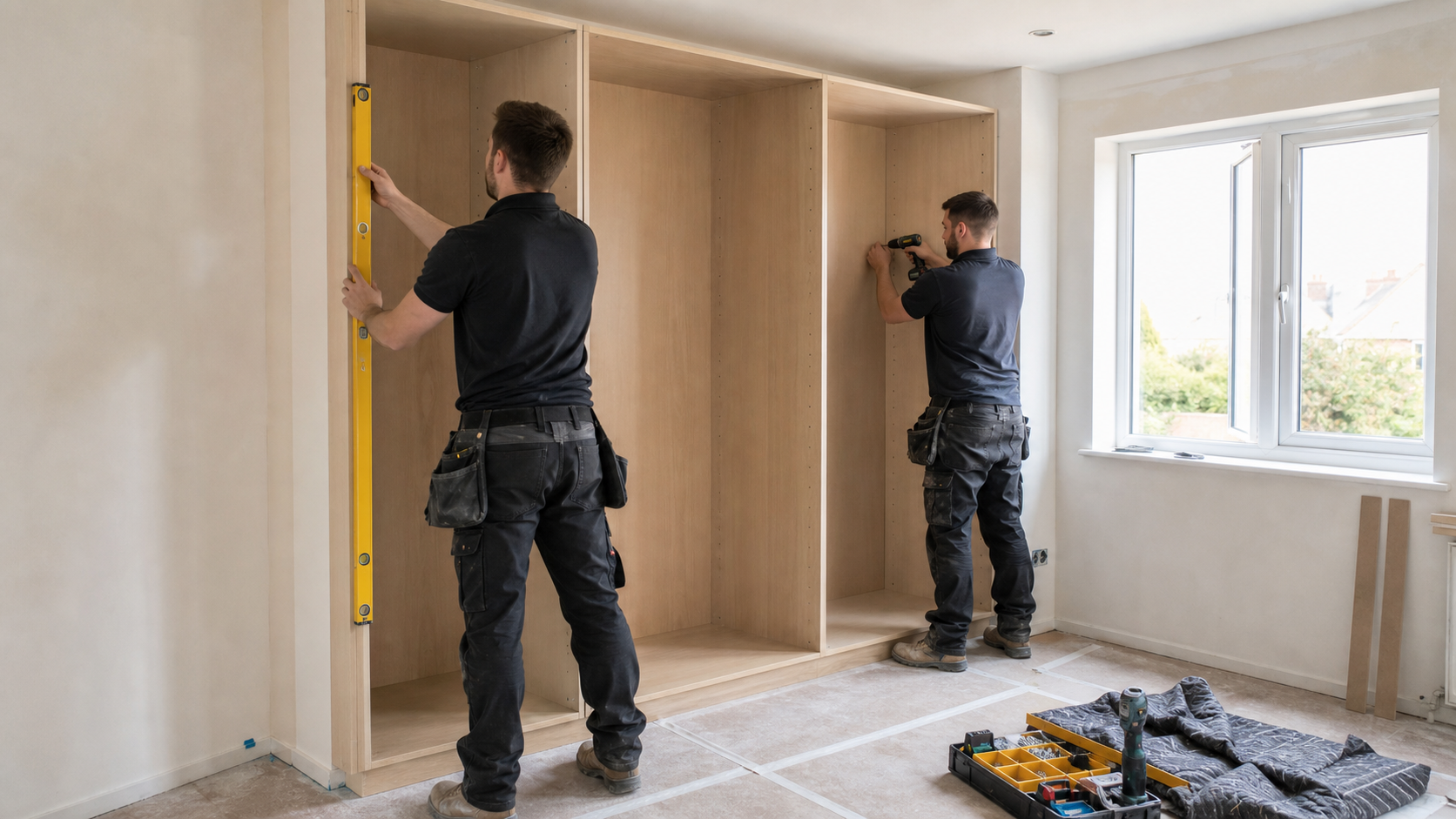
A simple fixed mount on a standard stud wall, with cables left visible or run through a basic surface cover, is a realistic DIY project for someone comfortable with a drill and a stud finder. Anything beyond that — concealed in-wall cabling, a recessed cavity, solid masonry or dot-and-dab walls, or a bespoke media wall unit built around the TV — is generally better handled by a professional installer, both for a cleaner finish and because the margin for error on wall fixings and cable routing is considerably lower.
Keeping a TV Wall in Good Condition
- Check mounting hardware periodically — screws and fixings can loosen slightly over years of use, particularly if the TV is adjusted or moved regularly on a tilt or full-motion mount.
- Keep cable connections secure and inspect them if you notice signal issues, since a loose connection is a more common cause of picture or sound problems than the TV itself.
- Make sure there's enough clearance around the TV and any AV equipment for ventilation, particularly in a recessed or built-in media wall design.
- If you ever change to a significantly heavier or larger TV, check the existing mount and fixings are still rated for the new weight rather than assuming they'll cope.
FAQ
What is the best type of TV mount for my wall?
It depends on your wall construction and how much you want to adjust the viewing angle. A fixed mount suits a wall directly opposite the main seating; a tilt or full-motion mount suits a wall viewed from an angle or a taller-than-average room.
Can I install a TV wall myself, or do I need a professional?
A straightforward stud-wall fixed mount is achievable for a confident DIYer. Anything involving concealed cabling, a recessed cavity, stone or block walls, or a bespoke media wall unit is best handled by a professional installer.
How do I hide the cables on a wall-mounted TV?
Options range from a surface-mounted cable cover to running cables inside the wall cavity via an in-wall power kit, through to a fully bespoke media wall unit with built-in cable routing designed in from the start.
What size TV suits a media wall?
This depends on your room size and typical viewing distance rather than a fixed rule. UK ownership data shows 50–59 inch screens are now the most common size in British homes, which is a useful reference point for a standard-sized living room.
Do I need an electrician for a TV wall installation?
If you're adding a new socket, moving an existing one, or running cabling inside a wall cavity, this should be done by a qualified, registered electrician in line with UK wiring regulations.
Related Reading
| Topic | Guide |
|---|---|
| Explore bespoke media wall units and living room storage | TV Media Walls at Xeeni ? |
| Compare fitted wardrobe designs for the rest of the home | Fitted Wardrobes at Xeeni ? |
| Book a design consultation for your living room | Contact Xeeni ? |
Update the internal blog links above to match final published URLs.
The right TV wall design comes down to your room's size, how you use the space day to day, and how much cable concealment and storage you actually need — not a single trending style. Measure your wall and plan your cable route before you buy any hardware, and if the installation involves concealed cabling or anything beyond a straightforward stud-wall mount, get a professional installer in to fit it properly the first time.