








 GET QUOTE
Home / Editorial / Why fitted wardrobes differ from freestanding ones

common
14 Jun 2026
Why fitted wardrobes differ from freestanding ones
Discover why fitted wardrobes differ from freestanding options. Explore design, space efficiency, and practical benefits for your home.
Fitted wardrobes are bespoke, built-in storage solutions integrated directly into a room’s architecture, while freestanding wardrobes are movable furniture units that stand independently. Understanding why fitted wardrobes differ from freestanding alternatives comes down to four core factors: design customisation, permanence, space efficiency, and installation. Each factor carries real consequences for your bedroom’s functionality and long-term value. Whether you own your home or rent, knowing these distinctions helps you make a storage decision you will not regret.
How fitted wardrobes use space more efficiently
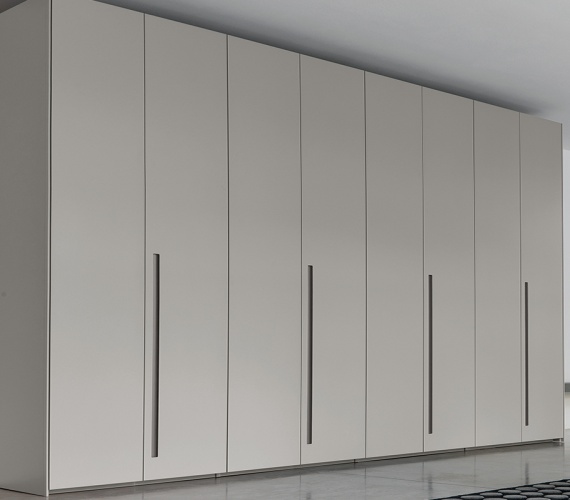
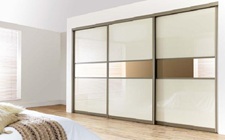
Space optimisation is the most measurable difference between fitted and freestanding wardrobes. Fitted wardrobes are manufactured to exact room dimensions, running wall to wall and floor to ceiling, which means no wasted volume anywhere in the room. Freestanding wardrobes, by contrast, leave unused space above and around them, often wasting the vertical storage potential that most bedrooms actually have in abundance.
Professional installers note that the dead space above a freestanding wardrobe is frequently underestimated by homeowners. That gap, which can exceed 50 centimetres, represents storage that could hold off-season clothing, bedding, or luggage. Fitted wardrobes claim this space as part of the unit itself, turning what would be a dust-collecting shelf top into a fully enclosed cabinet.

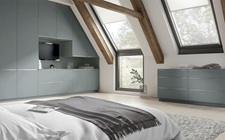
Awkward room features are another area where fitted wardrobes outperform freestanding ones decisively. Sloping ceilings in loft conversions, chimney breasts, and alcoves are all spaces that a standard freestanding wardrobe simply cannot accommodate. A bespoke fitted unit is built around these features, turning architectural quirks into storage assets rather than obstacles.
| Feature | Fitted wardrobe | Freestanding wardrobe |
|---|---|---|
| Vertical space use | Floor to ceiling, no gaps | Fixed height, gap above unit |
| Awkward spaces | Built around alcoves and slopes | Cannot adapt to irregular shapes |
| Wall-to-wall fit | Custom measured to exact width | Standard sizes leave side gaps |
| Dead space | Eliminated by design | Typically 50cm or more above unit |

Pro Tip: If your bedroom has a chimney breast or a sloping ceiling, a fitted wardrobe is almost always the better choice. These features are not obstacles for a bespoke unit; they become part of the design.
What customisation differences exist between fitted and freestanding?
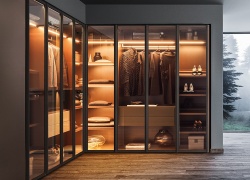
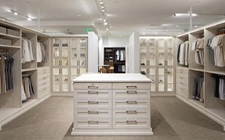
The internal configuration of a fitted wardrobe is designed entirely around the owner’s needs. Fitted wardrobes can include bespoke internal features such as shoe racks, jewellery drawers, charging stations, and hanging rails set at custom heights. This level of specificity is simply not available in mass-produced freestanding units, which arrive with a generic internal layout of one or two rails and a shelf or two.
Freestanding wardrobes do offer one genuine advantage in this area: stylistic variety. Because they are furniture pieces rather than architectural fixtures, they can be mixed and matched with other bedroom furniture to create a layered, characterful look. Brands such as IKEA, Habitat, and John Lewis offer freestanding wardrobes in dozens of finishes, from solid oak to high-gloss white, giving renters and style-conscious buyers a quick way to refresh a room’s appearance.
Fitted wardrobes integrate with the room itself rather than sitting within it. The doors, frames, and panels align with skirting boards, cornicing, and wall lines, creating a built-in appearance that reads as part of the architecture. This is particularly effective in period properties where a seamless finish adds to the overall character of the space. Xeeni’s fitted wardrobe colours and themes service helps clients select finishes that complement existing décor rather than compete with it.
Here is a summary of the key customisation differences:
- Internal layout: Fitted wardrobes offer fully bespoke configurations; freestanding units use fixed, generic layouts.
- Specialist storage: Fitted wardrobes accommodate shoe racks, charging stations, and pull-out drawers; freestanding wardrobes rarely do.
- Aesthetic integration: Fitted wardrobes align with room architecture; freestanding wardrobes add furniture character.
- Finish adaptability: Both types offer a range of finishes, but fitted wardrobes can be colour-matched to walls and woodwork precisely.
- Future changes: Freestanding wardrobes can be replaced quickly; fitted wardrobes require professional work to alter significantly.
Pro Tip: When choosing a fitted wardrobe finish, select neutral, high-quality finishes that will remain stylish as trends change. Bespoke does not mean bold; it means built to last.
How does the installation process differ?
The installation process is where fitted and freestanding wardrobes diverge most practically. Understanding this difference helps set realistic expectations before you commit to either option.
- Initial consultation. A fitted wardrobe project begins with a professional design consultation. At Xeeni, this involves measuring the room precisely, discussing storage requirements, and agreeing on a design that suits both the space and the client’s lifestyle.
- Manufacturing. Once the design is confirmed, the wardrobe components are custom manufactured to the agreed specifications. This stage typically takes several weeks, as each panel, door, and internal fitting is produced to order rather than pulled from a warehouse shelf.
- Professional installation. Fitted wardrobes are installed by professionals, fixed to walls and floors to create a permanent, stable structure. The process can take one to two days depending on the size and complexity of the design.
- Finishing and snagging. After installation, any finishing touches such as handles, lighting, or mirror panels are added. A snagging check confirms everything meets the agreed specification before the client signs off.
Freestanding wardrobes bypass all of this. You purchase the unit, assemble it at home, and the process is complete within hours. This speed and simplicity makes freestanding wardrobes the practical choice for renters or anyone who moves frequently. The trade-off is durability. Fitted wardrobes are less prone to distortion and structural damage over time because they are fixed to the building itself, whereas flat-pack freestanding units often loosen at joints and deteriorate with repeated assembly and disassembly.
Fitted vs freestanding wardrobes: which costs more?
Cost is the factor that most often determines which wardrobe type a buyer chooses, and the comparison is more nuanced than it first appears. Freestanding wardrobes are generally more affordable upfront, with entry-level units available from under £200 and mid-range options sitting between £400 and £1,500. Fitted wardrobes carry a higher initial cost because they include design, manufacturing, and professional installation.
The long-term picture shifts the calculation considerably. A fitted wardrobe built from quality materials and installed correctly can last decades without significant deterioration. A freestanding wardrobe, particularly one made from MDF or particleboard, may need replacing within five to ten years. Over a twenty-year period, the cumulative cost of replacing freestanding units can exceed the one-time investment in a fitted alternative.
| Cost factor | Fitted wardrobe | Freestanding wardrobe |
|---|---|---|
| Upfront cost | Higher, includes design and installation | Lower, off-the-shelf pricing |
| Lifespan | Decades with quality build | 5 to 15 years typically |
| Replacement cost | Minimal if maintained | Recurring every few years |
| Resale value impact | Positive for property value | Neutral or removed on sale |
| Flexibility | Fixed once installed | Can be sold or moved |
Fitted wardrobes also add measurable value to a property. Estate agents consistently report that built-in bedroom storage is a selling point for buyers, particularly in urban markets where bedroom space is at a premium. For homeowners planning to sell within the next decade, a fitted wardrobe is both a practical upgrade and a financial one.
Which wardrobe type suits your lifestyle and room?
Choosing between fitted and freestanding wardrobes is ultimately a lifestyle decision as much as a design one. The right choice depends on how long you plan to stay in a property, how much storage you need, and how much you value a polished, integrated finish.
Fitted wardrobes are the stronger choice when:
- You own your home and plan to stay for five or more years.
- Your bedroom has awkward features such as alcoves, chimney breasts, or sloping ceilings.
- You have specific storage requirements, such as a large shoe collection, suits that need full-length hanging, or a need for integrated lighting.
- You want a bedroom that looks considered and architecturally finished rather than furnished.
- You are thinking about resale value and want storage that adds to the property rather than leaving with you.
Freestanding wardrobes are the stronger choice when:
- You rent your home and cannot make permanent alterations.
- You move frequently and need furniture that travels with you.
- You want to refresh your bedroom’s look without a significant investment or lead time.
- Your storage needs are straightforward and a standard internal layout meets them comfortably.
- Budget is the primary constraint and a lower upfront cost is the deciding factor.
Room size matters too. In smaller bedrooms, a fitted wardrobe’s ability to use every centimetre of wall space makes a tangible difference to how the room feels and functions. In a larger room with generous proportions, a freestanding wardrobe can sit comfortably without creating a cramped effect. Xeeni’s fitted bedroom design ideas page shows how different room sizes and shapes can be approached with bespoke solutions.
Key takeaways
Fitted wardrobes outperform freestanding wardrobes on space efficiency, customisation, and long-term value, while freestanding wardrobes win on upfront cost, portability, and speed of installation.
| Point | Details |
|---|---|
| Space efficiency | Fitted wardrobes eliminate dead space above and around units, using every centimetre of the room. |
| Bespoke configuration | Fitted wardrobes offer custom internal layouts; freestanding units use fixed, generic arrangements. |
| Installation timeline | Fitted wardrobes take weeks from consultation to completion; freestanding units are ready within hours. |
| Long-term value | Fitted wardrobes last longer and can add to property resale value; freestanding units are cheaper but shorter-lived. |
| Lifestyle fit | Renters and frequent movers benefit from freestanding wardrobes; long-term homeowners gain more from fitted solutions. |
The detail most people overlook when choosing a wardrobe
By Kiran
After working with homeowners on fitted wardrobe projects for many years, the most common regret I hear is not about cost or style. It is about the space above the old freestanding wardrobe. People describe clearing out a bedroom and suddenly realising how much volume they had simply written off. That gap above the unit, often 50 centimetres or more of perfectly usable height, had been accumulating dust for years while they complained about not having enough storage.
The second misunderstanding I encounter regularly is around permanence. Many people assume that choosing a fitted wardrobe means being locked into a decision forever. In practice, quality fitted wardrobes are designed with longevity in mind, and the finishes and configurations that Xeeni recommends are chosen precisely because they remain functional and stylish as life changes. You are not locked in; you are investing in something that grows with you.
My honest advice is this: if you own your home and you are frustrated by storage, do not reach for a freestanding wardrobe as a quick fix. The upfront cost of a fitted solution is real, but so is the daily benefit of a bedroom that actually works. If you rent, a quality freestanding wardrobe from a reputable brand is a sensible choice, but be realistic about its lifespan and plan accordingly.
The decision is not complicated once you are honest about your situation. How long will you be here? What do you actually need to store? What does the room look like when it is working properly? Answer those three questions and the right choice becomes clear.
— Kiran
Discover what a bespoke fitted wardrobe can do for your bedroom

At Xeeni, we design and install custom fitted wardrobes that are built precisely for your room and your life. With over 20 years of experience and a 4.9/5 customer satisfaction rating, we bring the same attention to detail to every project, from a single alcove wardrobe to a full walk-in wardrobe suite. Every client begins with a free design consultation, where we measure your space, discuss your storage needs, and present a design tailored to your exact specifications. There are no generic layouts and no compromise on quality. If you are ready to see what a fitted wardrobe can genuinely do for your bedroom, explore our design service and book your free consultation today.
FAQ
What is the main difference between fitted and freestanding wardrobes?
Fitted wardrobes are custom built into a room’s architecture, running floor to ceiling and wall to wall, while freestanding wardrobes are movable furniture units with fixed dimensions. The core difference lies in permanence, space efficiency, and the degree of internal customisation available.
Are fitted wardrobes worth the higher cost?
Fitted wardrobes carry a higher upfront cost but offer greater durability, better use of space, and a positive impact on property resale value. Over a ten to twenty-year period, the total cost of replacing freestanding units often exceeds the one-time investment in a fitted alternative.
Can renters have fitted wardrobes installed?
Renters generally cannot install fitted wardrobes without landlord permission, as they are fixed permanently to walls and floors. Freestanding wardrobes are the practical choice for renters because they are portable and leave no permanent alterations to the property.
How long does it take to have a fitted wardrobe installed?
A fitted wardrobe project typically takes several weeks from the initial consultation to completed installation, covering design, custom manufacturing, and professional fitting. The installation itself usually takes one to two days depending on the size and complexity of the design.
Do fitted wardrobes work in small bedrooms?
Fitted wardrobes are particularly effective in small bedrooms because they use every available centimetre of wall and vertical space. By eliminating the gaps and dead space that freestanding units leave, a fitted wardrobe can significantly increase the usable storage in a compact room. You can explore options through Xeeni’s fitted bedrooms FAQs for guidance specific to smaller spaces.


